Jaynes’ World
An Entropy-Based Information Game
Neil D. Lawrence
Sorrento Meeting
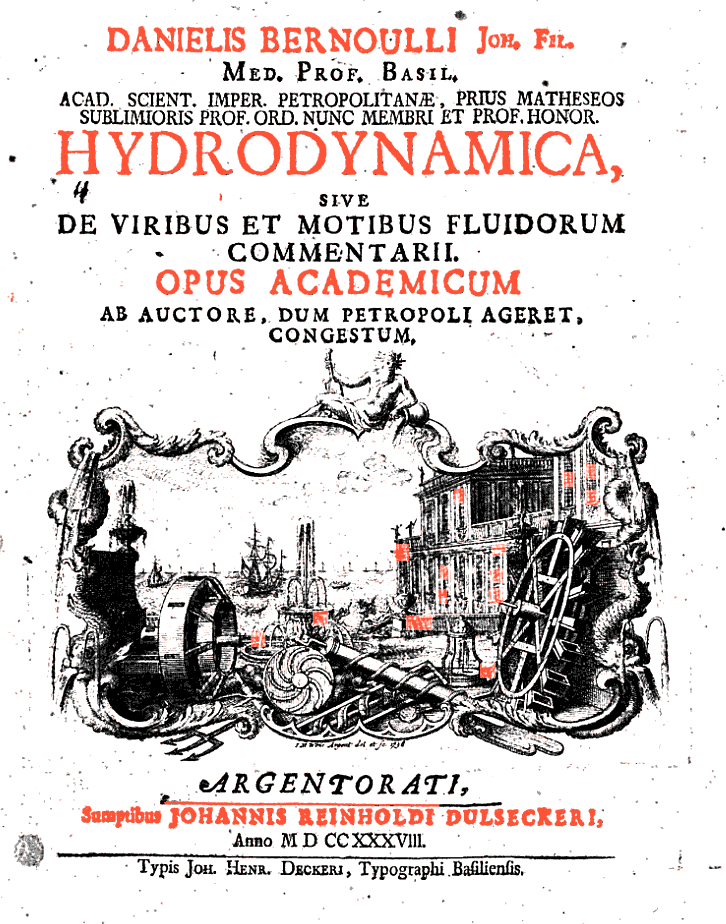
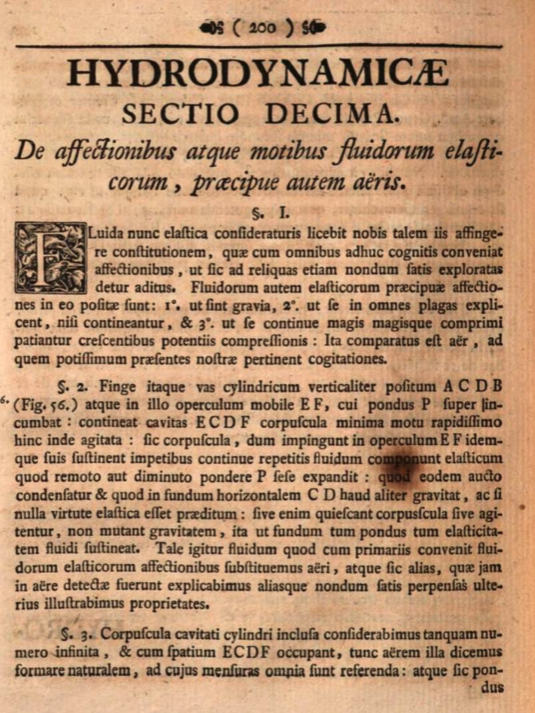
Hydrodynamica
Entropy Billiards
<canvas id="multiball-canvas" width="700" height="500" style="border:1px solid black;display:block;width:100%"></canvas><div>Velocity-bin entropy: <output id="multiball-entropy"></output></div>
<div id="multiball-histogram-canvas" style="width:100%;height:250px"></div>
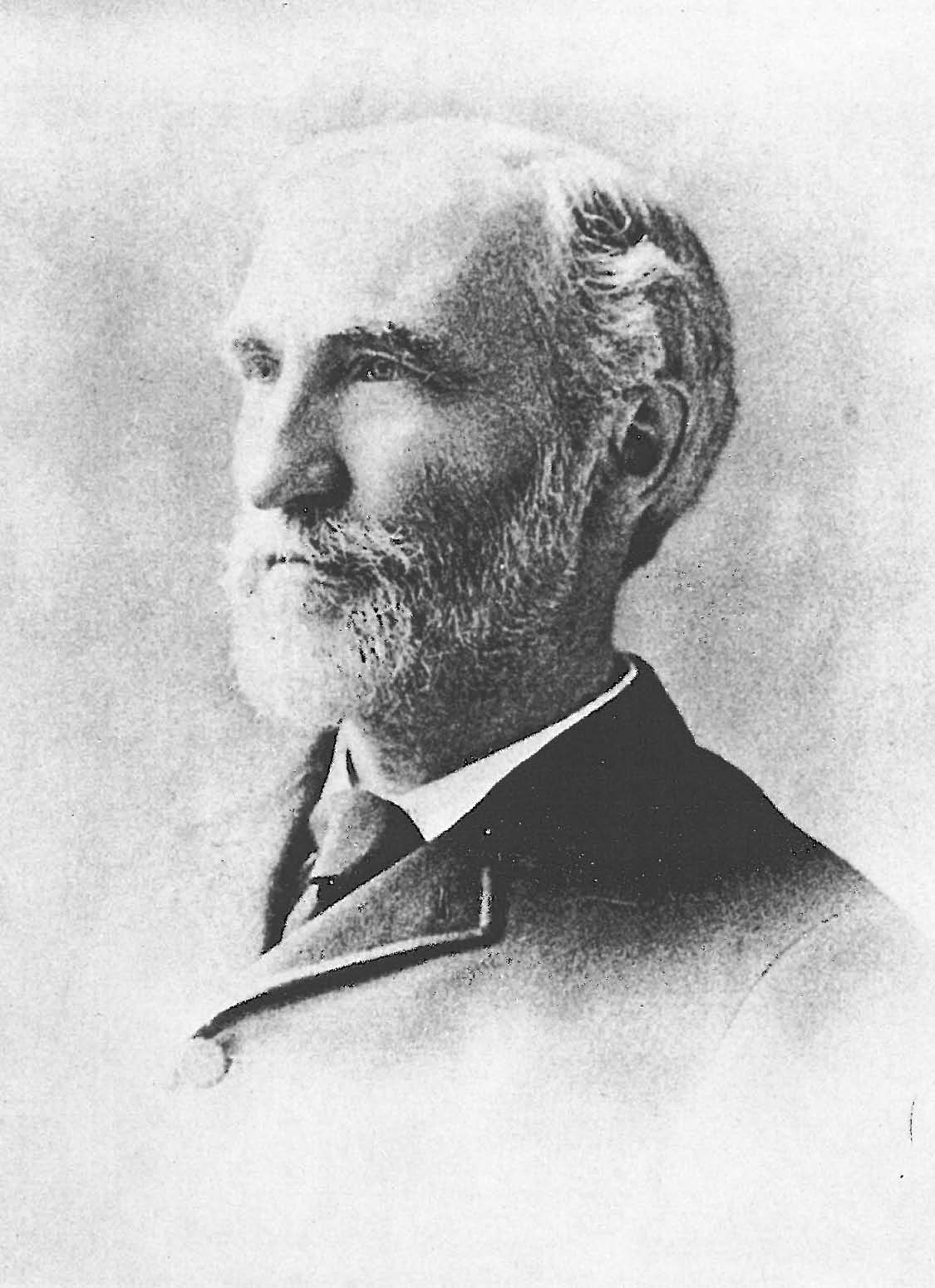
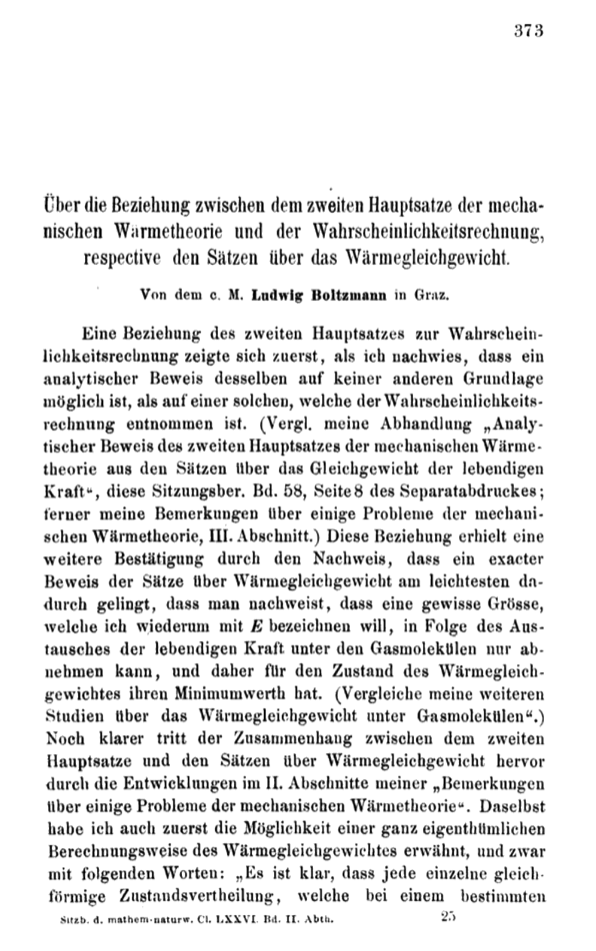
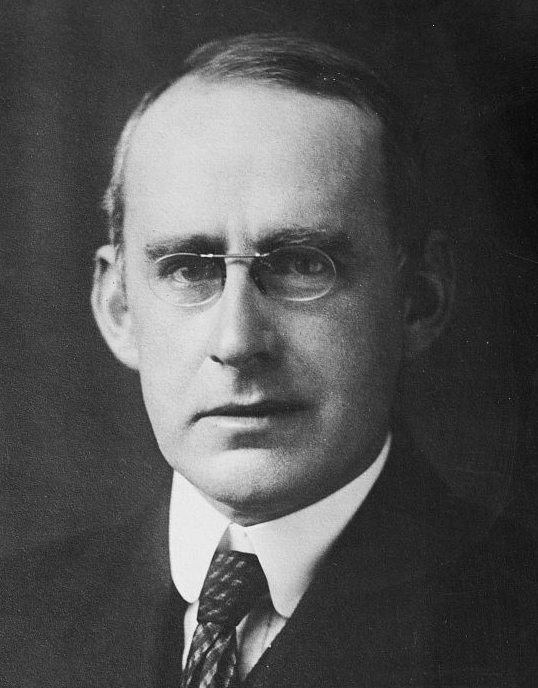
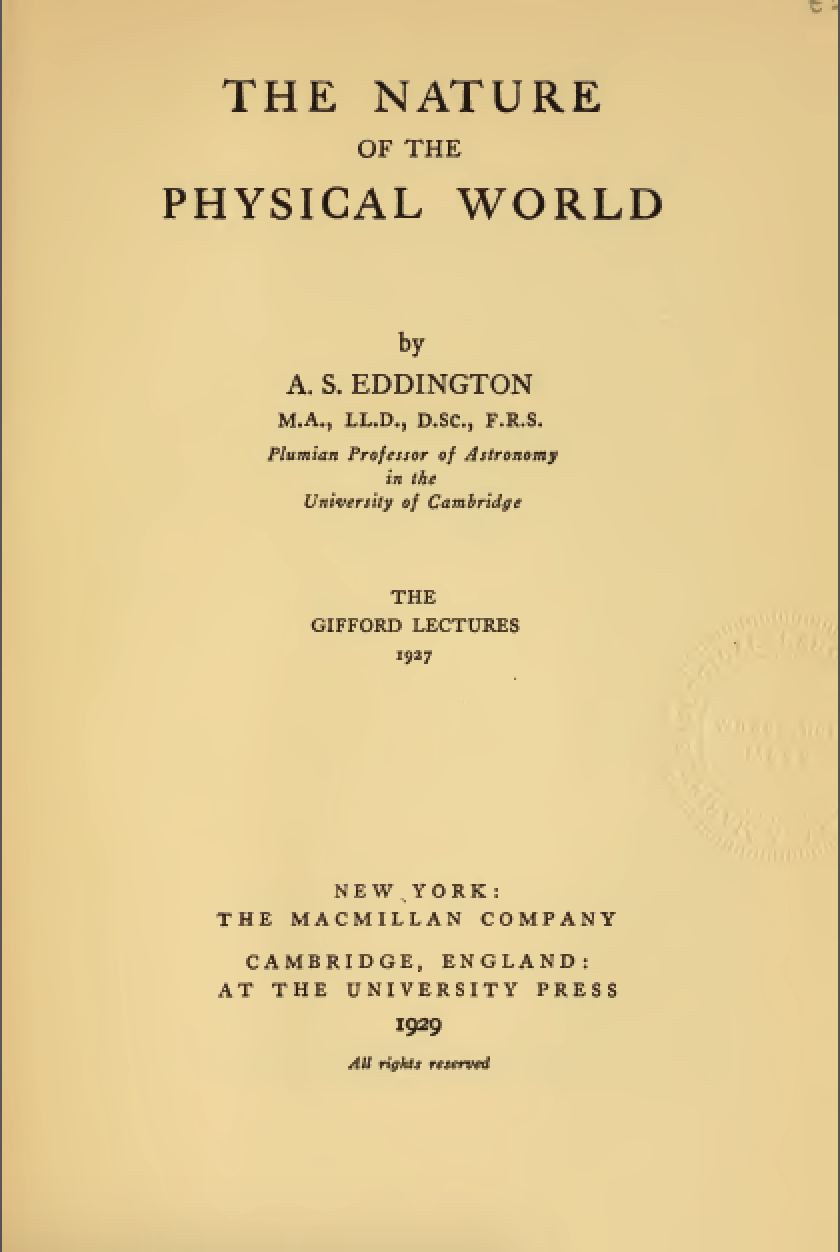
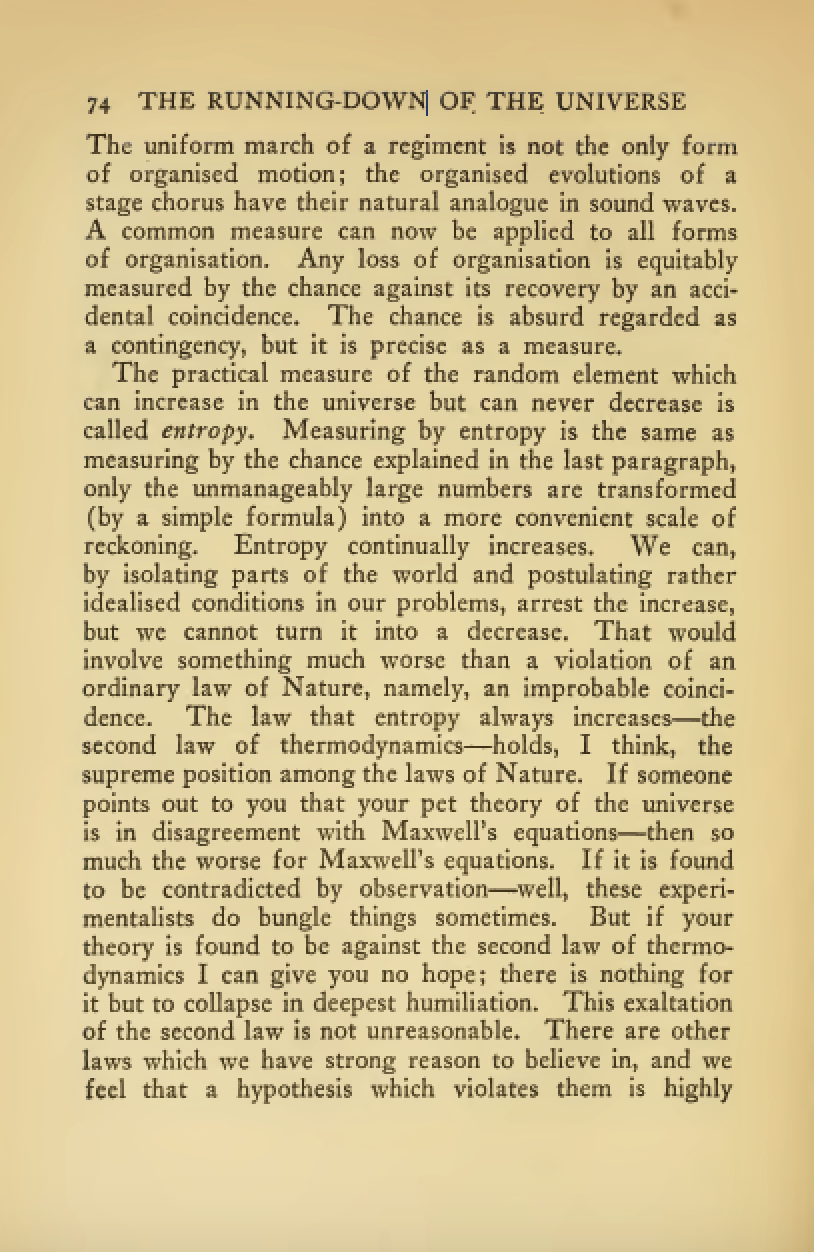
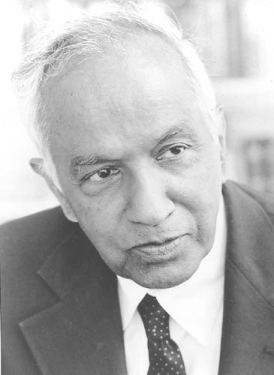
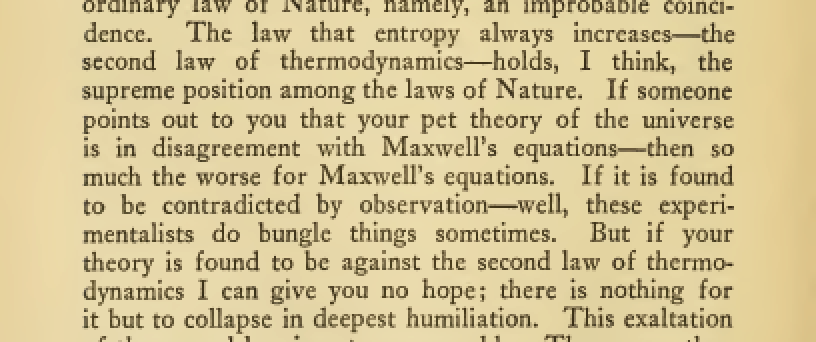
Maxwell’s Demon
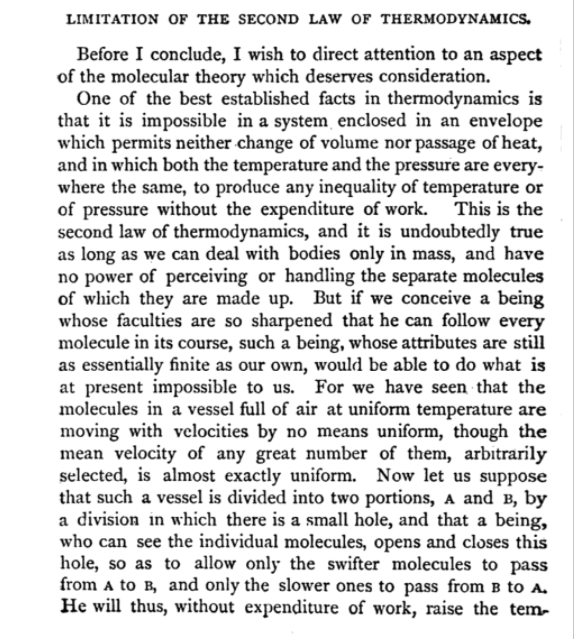
<canvas id="maxwell-canvas" width="700" height="500" style="border:1px solid black;display:block;width:100%"></canvas><div>Velocity-bin entropy: <output id="maxwell-entropy"></output></div>
<div id="maxwell-histogram-canvas" style="width:100%;height:250px"></div>Information Theory and Thermodynamics
- Information theory quantifies uncertainty and information
- Core concepts inspired by thermodynamic ideas
- Information entropy \(\leftrightarrow\) Thermodynamic entropy
- Free energy minimization common in both domains
Entropy
Entropy \[ S(X) = -\sum_X \rho(X) \log p(X) \]
In thermodynamics preceded by Boltzmann’s constant, \(k_B\)
Exponential Family
- Exponential family: \[ \rho(Z) = h(Z) \exp\left(\boldsymbol{\theta}^\top T(Z) + A(\boldsymbol{\theta})\right) \]
- Entropy is, \[ S(Z) = A(\boldsymbol{\theta}) - E_\rho\left[\boldsymbol{\theta}^\top T(Z) + \log h(Z)\right] \]
Where \[ E_\rho\left[T(Z)\right] = \nabla_\boldsymbol{\theta}A(\boldsymbol{\theta}) \] because \(A(\boldsymbol{\theta})\) is log partition function.
operates as a cummulant generating function for \(\rho(Z)\).
Available Energy
- Available energy: \[ A(\boldsymbol{\theta}) \]
- Internal energy: \[ U(\boldsymbol{\theta}) = A(\boldsymbol{\theta}) + T S(\boldsymbol{\theta}) \]
- Traditional relationship \[ A = U - TS \]
- Legendre transformation of entropy
Work through Measurement
- Split system \(Z\) into two parts:
- Variables \(X\) - stochastically evolving
- Memory \(M\) - low entropy partition
Joint Entropy Decomposition
Joint entropy can be decomposed \[ S(Z) = S(X,M) = S(X|M) + S(M) = S(X) - I(X;M) + S(M) \]
Mutual information \(I(X;M)\) connects information and energy
Measurement and Available Energy
Measurement changes system entropy by \(-I(X;M)\)
Increases available energy
Difference in available energy: \[ \Delta A = A(X) - A(X|M) = I(X;M) \]
Can recover \(k_B T \cdot I(X;M)\) in work from the system
Information to Work Conversion
- Maxwell’s demon thought experiment in practice
- Information gain \(I(X;M)\) can be converted to work
- Maximum extractable work: \(W_{max} = k_B T \cdot I(X;M)\)
- Measurement creates a non-equilibrium state
- Information is a physical resource
The Animal Game
- Intelligence as optimal uncertainty reduction
- 20 Questions game as intuitive example
- Binary search exemplifies optimal strategy
- Information gain measures question quality
- Wordle as a more complex example
The 20 Questions Paradigm
Entropy Reduction and Decisions
- Entropy before question: \(S(X)\)
- Entropy after answer: \(S(X|M)\)
- Information gain: \(I(X;M) = S(X) - S(X|M)\)
- Optimal decision maximise \(I(X;M)\) per unit cost
Thermodynamic Parallels
- Intelligence requires work to reduce uncertainty
- Thermodynamic work reduces physical entropy
- Both operate under resource constraints
- Both bound by fundamental efficiency limits
Information Engines: Intelligence as an Energy-Efficiency
- Information can be converted to available energy
- Simple systems that exploit this are “information engines”
- This provides our first model of intelligence
Measurement as a Thermodynamic Process: Information-Modified Second Law
- Measurement is a thermodynamic process
- Maximum extractable work: \(W_\text{ext} \leq -\Delta\mathcal{F} + k_BTI(X;M)\)
- Information acquisition creates work potential
\[ I(X;M) = \sum_{x,m} \rho(x,m) \log \frac{\rho(x,m)}{\rho(x)\rho(m)}, \]
Efficacy of Feedback Control
Channel Coding Perspective on Memory
- Memory acts as an information channel
- Channel capacity limited by memory size: \(C \leq n\) bits
- Relates to Ashby’s Law of Requisite Variety and the information bottleneck
Decomposition into Past and Future
Model Approximations and Thermodynamic Efficiency
- Perfect models require infinite resources
- Intelligence balances measurement against energy efficiency
- Bounded rationality as thermodynamic necessity
Markov Blanket
- Split system into past/present (\(X_0\)) and future (\(X_1\))
- Memory \(M\) creates Markov separation when \(I(X_0;X_1|M) = 0\)
- Efficient memory minimizes information loss
At What Scales Does this Apply?
- Equipartition theorem: \(kT/2\) energy per degree of freedom
- Information storage is a small perturbation in large systems
- Most relevant at microscopic scales
Small-Scale Biochemical Systems and Information Processing
- Microscopic biological systems operate where information matters
- Molecular machines exploit thermal fluctuations
- Information processing enables work extraction
Molecular Machines as Information Engines
- ATP synthase, kinesin, photosynthetic apparatus
- Convert environmental information to useful work
- Example: ATP synthase uses ~3-4 protons per ATP
ATP Synthase: Nature’s Rotary Engine
Jaynes’s Maximum Entropy Principle
Jaynes (1957): Statistical mechanics as inference with incomplete information
Maximum entropy principle: most honest description of what we know
Avoids unwarranted assumptions beyond available data
Die example: Average result 4.5 instead of 3.5
Constraints:
- \(\sum_{n=1}^6 P_n = 1\) (normalization)
- \(\sum_{n=1}^6 nP_n = 4.5\) (observed average)
The General Maximum-Entropy Formalism
Jaynes’ World
- Zero-player game implementing entropy game
- Distribution \(\rho(Z)\) over state space \(Z\)
- State space partitioned into observables \(X\) and memory \(M\)
- Entropy bounded: \(0 \leq S(Z) \leq N\)
Jaynes’ World
Unlike animal game (which reduces entropy), Jaynes’ World maximizes entropy
System evolves by ascending the entropy gradient \(S(Z)\)
Animal game: max uncertainty → min uncertainty
Jaynes’ World: min uncertainty → max uncertainty
Thought experiment: looking backward from any point
Game appears to come from minimal entropy configuration (“origin”)
Game appears to move toward maximal entropy configuration (“end”)
\[ \rho(Z) = h(Z) \exp(\boldsymbol{\theta}^\top T(Z) - A(\boldsymbol{\theta})), \] where \(h(Z)\) is the base measure, \(T(Z)\) are sufficient statistics, \(A(\boldsymbol{\theta})\) is the log-partition function, \(\boldsymbol{\theta}\) are the natural parameters of the distribution.}
Exponential Family
- Jaynes showed that entropy optimization leads to exponential family distributions. \[\rho(Z) = h(Z) \exp(\boldsymbol{\theta}^\top T(Z) - A(\boldsymbol{\theta}))\]
- \(h(Z)\): base measure
- \(T(Z)\): sufficient statistics
- \(A(\boldsymbol{\theta})\): log-partition function
- \(\boldsymbol{\theta}\): natural parameters
Information Geometry
- System evolves within information geometry framework
- Entropy gradient \[ \nabla_{\boldsymbol{\theta}}S(Z) = \mathbf{g} = \nabla^2_\boldsymbol{\theta} A(\boldsymbol{\theta}(M)) \]
Fisher Information Matrix
- Fisher information matrix \[ G(\boldsymbol{\theta}) = \nabla^2_{\boldsymbol{\theta}} A(\boldsymbol{\theta}) = \text{Cov}[T(Z)] \]
- Important: We use gradient ascent, not natural gradient
Gradient Ascent
- Gradient step \[ \Delta \boldsymbol{\theta} \propto \mathbf{g} \]
- Natural gradient step \[ \Delta \boldsymbol{\theta} \propto \eta G(\boldsymbol{\theta})^{-1} \mathbf{g} \]
System Evolution
Start State
- Low entropy, near lower bound
- Highly structured information in \(M\)
- Strong temporal dependencies (high non-Markovian component)
- Precise values for \(\boldsymbol{\theta}\) uncertainty in other parameter characteristics
- Uncertainty principle balances precision vs. capacity
End State
- Maximum entropy, approaching upper bound \(N\)
- Zeno’s paradox: \(\nabla_{\boldsymbol{\theta}}S \approx 0\)
- Primarily Markovian dynamics
- Steady state with no further entropy increase possible
Key Point
- Both minimal and maximal entropy distributions belong to exponential family
- This is a direct consequence of Jaynes’ entropy optimization principle
- System evolves by gradient ascent in natural parameters
- Uncertainty principle governs the balance between precision and capacity
Jaynes’ World
- Configuration is primary; parameters emerge from monitoring choices
- Distribution captures uncertainty about possible configurations
- Framework for observer-free dynamics and entropy-based emergence
Fundamental Structure: Configuration and Uncertainty
Configuration as Primary Reality
- Configuration: actual structural relationships between variables
- Primary ontological reality, independent of observation
- Parameters and mathematics are epistemic tools for tracking configuration
Uncertainty Distribution Over Configurations
- Density matrix \(\rho\): uncertainty about which configuration is actual
- Not the configuration itself, but probability over possible configurations
- Von Neumann entropy: amount of uncertainty/disorder in our knowledge
Emergence of Mathematical Structure
Exponential Family as Inevitable Consequence
- Exponential family form emerges automatically
- Result of minimizing uncertainty subject to resolution constraints
- Natural parameters \(\theta_i\) are Lagrange multipliers from optimization
System Structure Through Uncertainty Dynamics
- Full set of variables: \(Z = \{Z_1, Z_2, \dots, Z_n\}\)
- Partition emerges from uncertainty resolution:
- Active variables \(X(\tau)\): resolvable above threshold \(\varepsilon\)
- Latent variables \(M(\tau)\): uncertainty reservoir below threshold
.
Derived Mathematical Objects
- Log-partition function: \(A(\boldsymbol{\theta}) = \log Z(\boldsymbol{\theta})\)
- Von Neumann entropy: \(S(\boldsymbol{\theta}) = A(\boldsymbol{\theta}) - \boldsymbol{\theta}^\top \nabla A(\boldsymbol{\theta})\)
- Fisher Information: \(G_{ij}(\boldsymbol{\theta}) = \frac{\partial^2 A}{\partial \theta_i \partial \theta_j}\)
- All emerge from uncertainty minimization, not imposed assumptions
Resolution Constraints and Discrete Structure
- Maximum uncertainty capacity: \(N\) bits
- Minimum detectable resolution: \(\varepsilon\)
- Discrete transitions emerge from continuous underlying uncertainty
Uncertainty-Driven Dynamics
Core Principle: Uncertainty Resolution
- System evolves to resolve uncertainty about configuration
- Steepest ascent in entropy = fastest uncertainty resolution \[ \frac{\text{d}\boldsymbol{\theta}}{\text{d}\tau} = -G(\boldsymbol{\theta}) \boldsymbol{\theta} \]
- Parameters track this uncertainty resolution process
Variable Activation Through Uncertainty Thresholds
- Active variables: \(X(\tau) = \left\{ i \mid \left| \frac{\text{d}\theta_i}{\text{d}\tau} \right| \geq \varepsilon \right\}\)
- Activation occurs when uncertainty gradients exceed resolution threshold
- Configuration changes manifest as parameter threshold crossings
Information Geometry of Uncertainty Evolution
- Fisher matrix partitioning reflects uncertainty structure
- \(G_{XX}\): resolvable uncertainty geometry
- \(G_{MM}\): latent uncertainty reservoir
- \(G_{XM}\): coupling between resolved and unresolved uncertainty
Lemma 1: Form of the Minimal Entropy Configuration
- Minimal entropy state: \(\rho(\boldsymbol{\theta}_o) = \frac{1}{Z(\boldsymbol{\theta}_o)} \exp\left( \sum_i \theta_{oi} H_i \right)\)
- All parameters sub-threshold: \(|\dot{\theta}_{oi}| < \varepsilon\)
- Regular, continuous, and detectable above resolution scale
Lemma 2: Symmetry Breaking
- If \(\theta_k \in M(\tau)\) and \(|\dot{\theta}_k| \geq \varepsilon\), then \(\theta_k \in X(\tau + \delta)\)
- Latent variables can become active when their rate of change exceeds threshold
- Mechanism for emergence of new active variables
Perceived Time
- Entropy-time: \(t(\tau) := S_{X(\tau)}(\tau)\)
- Measures accumulated entropy of active variables
Monotonicity of Perceived Time
- \(t(\tau_2) \geq t(\tau_1)\) for all \(\tau_2 > \tau_1\)
- Perceived time always increases
- Implies irreversibility of the system
Corollary: Irreversibility
- \(t(\tau)\) increases monotonically
- Prevents time-reversal globally
- Provides an arrow of time for the system
In regions where parameters are weakly coupled to entropy change (low \(\boldsymbol{\theta}^\top \nabla_\boldsymbol{\theta} S[\rho_\boldsymbol{\theta}]\)), perceived time flows slowly.
At critical points where parameters become orthogonal to the entropy gradient (\(\boldsymbol{\theta}^\top \nabla_\boldsymbol{\theta} S[\rho_\boldsymbol{\theta}] \approx 0\)), the time parameterization approaches singularity indicating phase transitions in the system’s information structure. }
Conjecture: Frieden-Analogous Extremal Flow
- When latent-to-active flow is extremal, system exhibits critical slowing
- System entropy separates into active variables \(I = S[\rho_X]\) and “intrinsic information” \(J = S[\rho_{X|M}]\)
- Analogous to Frieden (1998) extreme physical information principle \(\delta(I - J) = 0\)
From Maximum to Minimal Entropy
- Maximum entropy = minimum assumptions
- Minimal entropy = maximum structure/information
- Same mathematical framework, different constraints
Minimal Entropy States in Quantum Systems
Histogram Game
Two-Bin Histogram Example
- Simplest example: Two-bin system
- States represented by probability \(p\) (with \(1-p\) in second bin)
Entropy
- Entropy \[ S(p) = -p\log p - (1-p)\log(1-p) \]
- Maximum entropy at \(p = 0.5\)
- Minimal entropy at \(p = 0\) or \(p = 1\)
Natural Gradients vs Steepest Ascent
\[ \Delta \theta_{\text{steepest}} = \eta \frac{\text{d}S}{\text{d}\theta} = \eta p(1-p)(\log(1-p) - \log p). \] \[ G(\theta) = p(1-p) \] \[ \Delta \theta_{\text{natural}} = \eta(\log(1-p) - \log p) \]
Gradient Ascent in Natural Parameter Space
Gradient Ascent Evolution
Entropy Evolution
Trajectory in Natural Parameter Space
Uncertainty Principle
- Information reservoir variables (\(M\)) map to natural parameters \(\boldsymbol{\theta}(M)\)
- Challenge: Need both precision in parameters and capacity for information
Formal Derivation of the Uncertainty Principle
- Information-theoretic derivation
- Begins with Shannon entropy constraints
- Reaches uncertainty bound through variational analysis
Definition of Capacity Variables
- Capacity variables \(c(M)\) precisely defined:
- Measure information storage potential
- Fourier-conjugate to parameters
Capacity \(\leftrightarrow\) Precision Paradox
- Fundamental trade-off emerges:
- \(\Delta\boldsymbol{\theta}(M) \cdot \Delta c(M) \geq k\)
- Cannot simultaneously have perfect precision and maximum capacity
Quantum vs Classical Information Reservoirs
- Near origin: quantum-like
- Wave encoding of capacity, non-local correlations
- Uncertainty principle saturated
- Higher entropy: Transition to “classical” behavior
- From wave-like to particle-like information storage
- Local rather than distributed encoding
Quantitative Demonstration
- Numerical example showing uncertainty principle
- Demonstrates trade-off across parameter space
- Shows saturation at minimal entropy
Maximum Entropy and Density Matrices
- Jaynes recognized density matrices as quantum extension
- Same maximum entropy principle applies
- Von Neumann entropy: \(S = -\text{Tr}(\rho \log \rho)\)
- Provides unified approach to classical and quantum systems
Quantum States and Exponential Families
- Minimal entropy quantum states belong to exponential families
- Classical: \(f(x; \theta) = h(x) \cdot \exp[\eta(\theta)^\top \cdot T(x) - A(\theta)]\)
- Density matrix: \(\rho = \exp(-\mathbf{R}^T \cdot \mathbf{G} \cdot \mathbf{R} - Z)\)
Fisher Information and the Uncertainty Principle
- Matrix G relates to quantum Fisher information: \[ \mathbf{G} = \text{QFIM}/4 \]
- Uncertainty-information relationship: \[ V \cdot \text{QFIM} \geq \frac{\hbar^2}{4} \]
Connection to Information Engines
- Minimal entropy states are optimal information engines
- They achieve maximum precision allowed by quantum mechanics
- Examples: squeezed states, coherent states, Gaussian entangled states
Minimal Entropy States
- Minimal entropy states (“origin” in Jaynes’ World)
- Constrained by uncertainty principle:
- \(\Delta\boldsymbol{\theta}(M) \cdot \Delta c(M) \geq k\)
- Fundamental limit on information structure
Structure of Minimal Entropy States
- Minimal entropy states have:
- Pure Gaussian form in parameter space
- Exactly saturate uncertainty bound
- Belong to exponential family
- Total entropy bounded: \(S(Z) = 0\) for minimal states, with \(0 \leq S(Z) \leq N\) overall
Fisher Information and Minimal Uncertainty
- Precision matrix \(\boldsymbol{\Lambda}\) directly related to Fisher information
- \(\mathbf{G} = \boldsymbol{\Lambda}/2\) (Fisher information matrix)
- Creates relationship:
- \(\mathbf{V} \cdot \mathbf{G} \geq k^2\)
Connection to Information Reservoirs
- Information reservoir \(M\) at minimal entropy:
- Stores information in wave-like patterns
- Distributes uncertainty optimally
- Creates non-local correlations
Implications for System Evolution
- As system evolves from minimal entropy:
- Uncertainty bound becomes less saturated
- Information encoding transitions from wave-like to particle-like
- System moves from quantum-like to classical-like behavior
Physical Interpretation
- Minimal entropy states analogous to:
- Squeezed states in quantum optics
- Ground states of many-body systems
- Coherent structures in complex systems
- Quantum states have minimum entropy due to uncertainty principle
- Minimal entropy states are pure Gaussian states
- These represent fundamental information engines
Von Neumann Entropy
- Quantum analog of Shannon entropy: \[S(\rho) = -\text{Tr}(\rho \ln \rho)\]
- Pure states: \(S(\rho) = 0\)
- Mixed states: \(S(\rho) > 0\)
Quantum Uncertainty Principle as a Constraint
- Position-momentum uncertainty: \[\Delta x \cdot \Delta p \geq \frac{\hbar}{2}\]
- Matrix form for multiple variables: \[V + i\frac{\hbar}{2}\Omega \geq 0\]
Density Matrices and Exponential Families
- Minimal entropy quantum states belong to exponential families
- Classical: \(f(x; \theta) = h(x) \cdot \exp[\eta(\theta)^\top \cdot T(x) - A(\theta)]\)
- Density matrix: \(\rho = \exp(-\mathbf{R}^T \cdot \mathbf{G} \cdot \mathbf{R} - Z)\)
Classical Exponential Family
Quantum Minimal Entropy State
Gradient Ascent and Uncertainty Principles
- Gradient ascent on entropy naturally respects uncertainty principles
- Systems evolve from quantum-like to classical-like regimes
- Uncertainty ellipses visualize this transition
Gaussian Systems and Uncertainty
- Multivariate Gaussian: \(\rho(z) \propto \exp\left(-\frac{1}{2}z^T \Lambda z\right)\)
- Precision matrix \(\Lambda\) determines uncertainty structure
- Entropy: \(S = \frac{1}{2}\log\det(V) + \text{constant}\)
- Uncertainty principle: \(\Delta x \cdot \Delta p \geq \frac{\hbar}{2}\)
Multivariate Systems and Saddle Points
- Multiple position-momentum pairs create rich dynamics
- System naturally slows near saddle points
- Some variables remain quantum-like while others become classical-like
Eigenvalue Evolution
Uncertainty Products Evolution
Entropy Evolution During Gradient Ascent
Evolution of Uncertainty Products
Visualising the Parameter-Capacity Uncertainty Principle
- Uncertainty principle: \(\Delta\theta \cdot \Delta c \geq k\)
- Minimal uncertainty states form ellipses in phase space
- Quantum-like properties emerge from information constraints
- Different uncertainty states visualized as probability distributions
Visualisation of the Uncertainty Principle
Scaling to Large Systems: Emergent Statistical Behavior
- Scale to systems with 1000+ position-momentum pairs
- Observe emergent statistical behaviors
- Identify clusters of similar dynamical patterns
- Analyze quantum-classical phase transitions
Emergent Statistical Behaviors
- Statistical phase transitions emerge
- Natural clustering of dynamical behaviors
- Scale-invariant patterns across system sizes
- Quantum-classical boundary becomes a statistical property
Large-Scale Gradient Ascent
Four-Bin Saddle Point Example
- Four-bin system creates 3D parameter space
- Saddle points appear where:
- Gradient is zero
- Some directions increase entropy
- Other directions decrease entropy
- Information reservoirs form in critically slowed directions
Saddle Point Example
Entropy Evolution
Saddle Points
Saddle Point Seeking Behaviour
Dynamical System
Entropy Bounds and Compactness
Resolution Constraints
Relationship Between Resolution Threshold and Entropy Bound
Multi-Scale Dynamics and Observable Separation
Observable Partitioning
Schur Complement Analysis
Sparsification Through Entropy Maximization
Action Functional Representation
Computational Implications
Emergence of Time
Information Geometry and Resolution Constraints
Information-Theoretic Interpretation
Entropy Maximization
Information Flow and Topography
Resolution and Uncertainty
Temporal Information Dynamics
Connections to Physical Theories
Frieden’s Extreme Physical Information
Conclusion
Spontaneous Organization Through Entropy Maximization
- Can entropy maximization lead to information organization
- Requires: mutual information increases despite overall entropy growth
- Would provides theoretical foundation for emergence of structure
- Needs notion of locality or topology to be fully meaningful
Formal Analysis of Spontaneous Organization
- Joint entropy decomposition: \(S[p(z,t)] = S(X) + S(M) - I(X;M)\)
- Turns derivative: \(\frac{\text{d}S}{\text{d}t} = \frac{\text{d}S(X)}{\text{d}t} + \frac{\text{d}S(M)}{\text{d}t} - \frac{\text{d}I(X;M)}{\text{d}t}\)
- Spontaneous organization when: \(\frac{\text{d}I(X;M)}{\text{d}t} > 0\)
Fisher Information and Multiple Timescales in Spontaneous Organization
Multiple Timescales and Mutual Information Growth
- Fisher information: \(G_{ij}(\boldsymbol{\theta}) = \mathbb{E}\left[\frac{\partial \log p(z|\boldsymbol{\theta})}{\partial \theta_i}\frac{\partial \log p(z|\boldsymbol{\theta})}{\partial \theta_j}\right]\)
- Multiple timescales: \(\eta_X \gg \eta_M\)
- Spontaneous organization requires: \(\|\nabla_{\boldsymbol{\theta}_X}S(X)\|^2 > \|\nabla_{\boldsymbol{\theta}_X}S\|^2\)
Condition for Information Structure Emergence
- Mutual information gradient: \(\nabla_{\boldsymbol{\theta}_X}I(X;M) \approx \nabla_{\boldsymbol{\theta}_X}S(X) - \nabla_{\boldsymbol{\theta}_X}S\)
- Organization emerges when entropy gradients diverge in direction
- Fast variables \(X\) explore state space while slow variables \(M\) capture persistent patterns
Adiabatic Elimination and Effective Dynamics
- Adiabatic elimination: fast variables reach quasi-equilibrium for each slow configuration
- Condition: \(\frac{\text{d}I(X;M)}{\text{d}t} \approx -\eta_M \text{tr}(\mathbf{H}_{XM})\)
- Organization occurs when \(\text{tr}(\mathbf{H}_{XM}) < 0\)
- System develops correlations that maximize entropy efficiently
Locality Through Conditional Independence
- Few slow modes can induce conditional independence
- Creates effective locality and modularity
- Emerges naturally from eigenvalue structure
Entropy Decomposition with Conditional Mutual Information
- Joint entropy decomposition with subsets of X: \(X = \{X^1, X^2, ..., X^K\}\)
- \(S(X, M) = S(M) + \sum_{k=1}^K S(X^k|M) - \sum_{k=1}^K \sum_{j<k} I(X^k; X^j|M)\)
- Conditional mutual information \(I(X^k; X^j|M)\) measures remaining dependencies
Conditional Independence and Locality
- For Gaussian systems, conditional independence requires block-diagonal precision matrix \(\Lambda_{X|M}\)
- Off-diagonal blocks → conditional mutual information \(I(X^k; X^j|M)\)
- Eigenvalue separation determines how effectively slow modes absorb dependencies
- Larger gaps → better factorization → stronger locality
Connection to Eigenvalue Structure
- Few small eigenvalues → strong conditional independence
- Eigenvectors of these slow modes define “information pathways”
- Creates natural graph structure of dependencies
- Analogous to order parameters in physical systems
Conditional Independence Visualization
Dependency Network Structure
Information Topography
- Information topography: landscape of information flow
- “Distance” between variables: \(d_I(X^i, X^j) = \frac{1}{I(X^i; X^j|M) + \epsilon}\)
- Creates intuitive notions of “information watersheds” and “channels”
Properties of Information Topography
- Non-Euclidean, dynamic, and hierarchical
- Shaped by eigenvalue spectrum separation
- Quantifies “information distance” and “barriers”
- Provides unified view of modularity across systems
Information Topography Visualization
Information Topography Eigenspectrum
3D Information Landscape
Temporal Markovian Decomposition
\(X\) divided into past/present \(X_0\) and future \(X_1\)
Same slow modes that induce spatial modularity also mediate temporal dependencies
Conditional mutual information: \[ I(X_0; X_1 | M) = \sum_{x_0,x_1,m} p(x_0,x_1,m) \log \frac{p(x_0,x_1|m)}{p(x_0|m)p(x_1|m)} \]
Measures dependency between past and future given memory state
Perfect Markovianity: \(I(X_0; X_1 | M) = 0\)
Slow modes serve dual purpose:
- Creating spatial modularity through conditional independence
- Providing temporal memory that bridges past and future
Eigenvalue spectrum determines both spatial and temporal structure
Fundamental tension between:
- Minimal entropy in slow modes (efficiency)
- Spatial conditional independence (modularity)
- Temporal conditional independence (memory)
Creates uncertainty principle with necessary trade-offs
Emergence of Conditional Independence Through Entropy Maximization
- Can conditional independence structures emerge naturally?
- Use gradient ascent on entropy to see eigenvalue structures form
- Observe how slow modes naturally acquire cross-system dependencies
- Track the emergence of conditional independence
Emergent Conditional Independence
- Natural eigenvalue separation into slow and fast modes
- Strong cross-system dependencies become conditionally independent
- Block structure emerges in conditional mutual information matrix
- Locality through conditional independence arises naturally
Fundamental Tradeoffs in Information Processing Systems
Three fundamental properties with mathematical formulations:
- Information Capacity: Variances of slow modes \(\sigma_i^2 \propto \frac{1}{\lambda_i}\)
- Modularity: Conditional independence \(I(X^i; X^j | M) \approx 0\) between modules
- Memory: Markovian dynamics \(I(X_0; X_1 | M) = 0\) for temporal information
Mathematical uncertainty relation: \(\mathcal{C}(M) \cdot \mathcal{S}(X|M) \cdot \mathcal{T}(X_0, X_1|M) \geq k\)
Rigorous mathematical definitions:
- \(\mathcal{C}(M) = \sum_{i=1}^{d_M} \frac{1}{\lambda_i} = \sum_{i=1}^{d_M} \sigma_i^2\) (Information capacity)
- \(\mathcal{S}(X|M) = \sum_{i \neq j} I(X^i; X^j | M)\) (Modularity)
- \(\mathcal{T}(X_0, X_1|M) = I(X_0; X_1 | M)\) (Memory)
Imposes fundamental limits on simultaneous optimization
Markov property emerges when slow modes capture all temporal dependencies
Mathematical tradeoffs between properties:
- Enhanced memory requires higher capacity slow modes (\(\uparrow \mathcal{C}(M)\))
- Stronger modularity constrains information flow paths (\(\downarrow \mathcal{S}(X|M)\))
- Higher information capacity may require more physical resources
The Duality Between Modularity and Memory
- Modularity and memory as dual aspects of the same phenomena:
- Modularity = “Spatial memory” (independence across space given M)
- Memory = “Temporal modularity” (independence across time given M)
- Both rely on conditional independence mediated by slow modes
- Same eigenvalue structure determines both properties
- Explains why highly modular systems often have sophisticated memory
Is Landauer’s Limit Related to Shannon’s Gaussian Channel Capacity?
Memory \(\equiv\) Communication through time
Storage is transmission to future
Both limited by thermal noise
At Landauer’s limit: \(E = k_BT\)
Gives \(\frac{S}{N} = 1\)
Results in capacity of \(\frac{1}{2}\) bit/s
Fundamental connection between energy and information
Implications for Information Engines
- Information engines must overcome thermal noise
- Related threshold for:
- Information erasure
- Information transmission
- Temperature sets fundamental noise floor
Detecting Transitions with Moment Generating Functions
- MGF: \(M_Z(t) = \mathbb{E}[e^{tZ}] = \exp(A(\theta+t) - A(\theta))\)
- Cumulant generating function: \(K_Z(t) = \log M_Z(t)\)
- Quantum-like variables: Oscillatory MGF behavior
- Classical variables: Monotonic MGF growth
- MGF reveals channel properties without needing state information
Information Reservoirs
Classical Hierarchical Memory Structure
\[ p(X|M) \approx \prod_i p(X_i|M_{\text{pa}(i)}) \]
Variable Transitions
\[ M_Z(t) = E[e^{t \cdot Z}] = \exp(A(\boldsymbol{\theta}+t) - A(\boldsymbol{\theta})). \]
\[ K_Z(t) = \log M_Z(t) = A(\boldsymbol{\theta}+t) - A(\boldsymbol{\theta}). \]
\[ \frac{d^2}{dt_i^2}K_Z(t)|_{t=0} = \frac{\partial^2 A(\boldsymbol{\theta})}{\partial \theta_i^2}. \]
Hierarchical Memory Organization Example
- Classical information reservoirs organize hierarchically
- Variables separate into distinct timescale bands
- Fast variables: rapidly changing, high processing capacity
- Slow variables: gradually changing, high memory capacity
- Connect across scales for efficient information processing
Conceptual Framework
Conclusion
Unifying Perspectives on Intelligence
- Intelligence through multiple lenses:
- Entropy game: Intelligence as optimal questioning
- Information engines: Intelligence as energy-efficient computation
- Least action: Intelligence as path optimization
- Schrödinger’s bridge: Intelligence as probability transport
- Jaynes’ world: Initial attempt to Bridge between different views.
A Unified View of Intelligence Through Information
Converging perspectives on intelligence:
- Efficient entropy reduction (Entropy Game)
- Energy-efficient information processing (Information Engines)
- Path optimization in information space (Least Action)
- Optimal probability transport (Schrödinger’s Bridge)
Unified core: Intelligence as optimal information processing
Implications:
- Fundamental limits on intelligence
- New metrics for AI systems
- Principled approach to cognitive modeling
- Information-theoretic approaches to learning
Research Directions
- Open questions:
- Information-theoretic intelligence metrics
- Physical limits of intelligent systems
- Connections to quantum information theory
- Practical algorithms based on these principles
- Biological implementations of information engines
- Applications:
- Active learning systems
- Energy-efficient AI
- Robust decision-making under uncertainty
- Cognitive architectures
Thanks!
- company: Trent AI
- book: The Atomic Human
- twitter: @lawrennd
- The Atomic Human
- newspaper: Guardian Profile Page
- blog: http://inverseprobability.com