Leadership and AI: Strategic Decision Making in the Age of Human-Analogue Machines

An MBA Masterclass on Human-Machine Collaboration

Neil D. Lawrence

LUISS Business School, Full-Time MBA Programme, Rome

Part 1: Understanding Human vs Machine Intelligence (60 minutes)

The Age of Human-Analogue Machines

Henry Ford’s Faster Horse


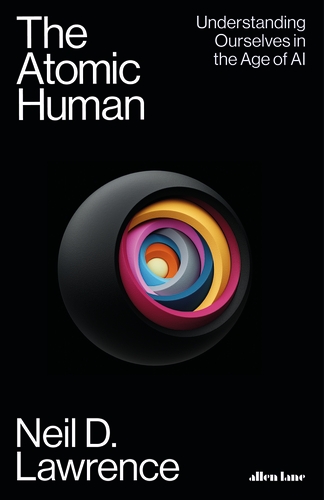
The Atomic Human

The Embodied Nature of Human Intelligence

E S A R I N T U L
O M D P C F B V
H G J Q Z Y X K W

Bauby and Shannon

bits/min
billions
2000
6
billion
calculations/s
~100
a billion
a billion
embodiment
20 minutes
5 billion years
15 trillion years

The Conversation: Where Humans Excel

Key Takeaways: Human vs Machine Intelligence

  • Human intelligence is fundamentally embodied and context-dependent
  • Bandwidth differences create complementary strengths
  • Conversation and social understanding remain uniquely human
  • AI augments rather than replaces human judgment

Exercise 1: Mapping Your Organisation’s Information Flows (30 minutes)

Exercise Debrief Questions

  • What surprised you about your organisation’s information flows?
  • Where are the critical human judgment points?
  • Where does information get bottlenecked?
  • How might AI change these flows - for better or worse?

Part 2: Information Topography and Decision Making (75 minutes)

The Information Revolution in Organizations

New Flow of Information

New Flow of Information

Evolved Relationship

Evolved Relationship

The Evolution of Organizational Decision Making

Networked Interactions

Bezos memo to Amazon in 2002

The API Mandate

  • All teams will henceforth expose their data and functionality through service interfaces.
  • Teams must communicate with each other through these interfaces.

  • There will be no other form of inter-process communication allowed: no direct linking, no direct reads of another team’s data store, no shared-memory model, no back-doors whatsoever. The only communication allowed is via service interface calls over the network.

  • It doesn’t matter what technology they use.
  • All service interfaces, without exception, must be designed from the ground up to be externalizable. That is to say, the team must plan and design to be able to expose the interface to developers in the outside world. No exceptions.

Duality of Corporation and Information

  • What is less written about is corporate structure.
  • This information infrastructure is reflected in the corporation.
  • Two pizza teams with devolved autonomy.
  • Bound together through corporate culture.

Conway’s Law

Any organization that designs a system (defined broadly) will produce a design whose structure is a copy of the organization’s communication structure.

Conway (n.d.)

Understanding Information Topography

An Attention Economy

  1. Human attention will always be a “scarce resource” (See Simon, 1971)
  2. Humans will never stop being interested in other humans.
  3. Organisations will keep trying to “capture” the attention economy.

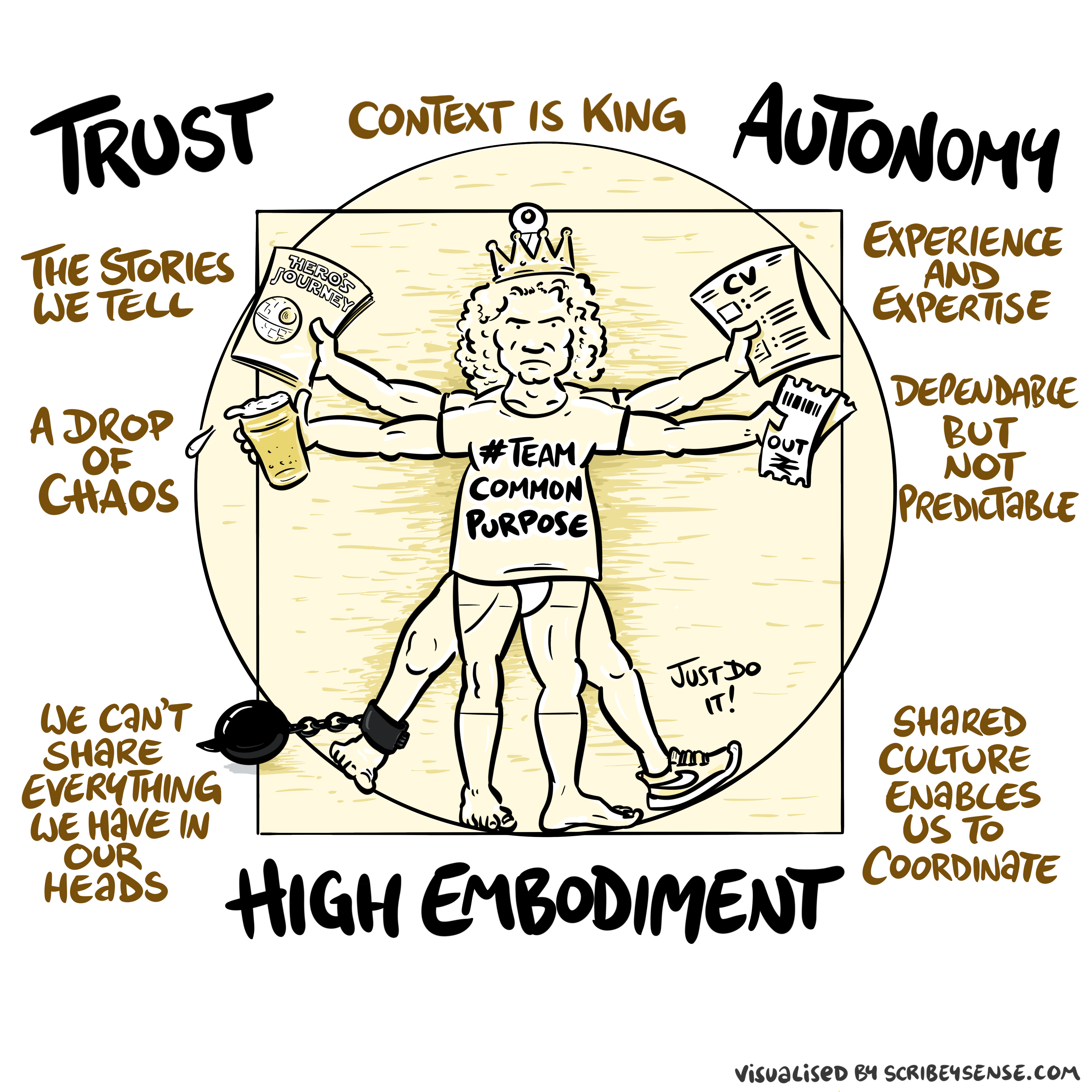
Trust, Autonomy and Embodiment

Trust, Autonomy and Embodiment

Balancing Centralised Control with Devolved Authority

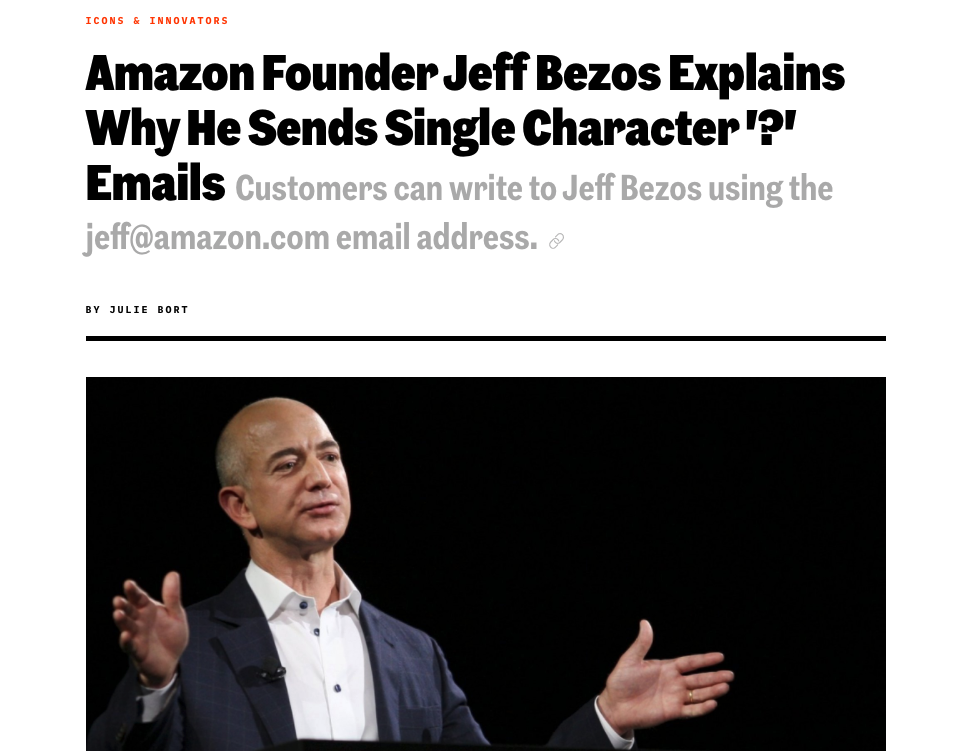
Question Mark Emails

Executive Sponsorship

  • Direct sponsorship from the most senior executive.
    • This has a cultural effect as well as a direct effect.
  • Bring about through involvement
    • develops understanding of capabilities of data science in exec team.

Pathfinder Projects

  • In executive context: an important project that is interdepartmental.
  • Should involve the CEO, CFO, CIO and data science team (or equivalents).

The Attention Economy Framework

  • Human attention is the scarcest organizational resource
  • AI changes who pays attention to what
  • Strategic allocation of attention determines competitive advantage
  • Organizations must design for attention management, not just task automation

Generative AI as Human-Analogue Machines

Generative AI as HAM

  • Generative AI provides us with an “analogue human”
  • An information amplifier with a multiplier of 300,000,000
  • Radically changes information infrastructure
  • From Conway’s Law: existing organisational models are redundant

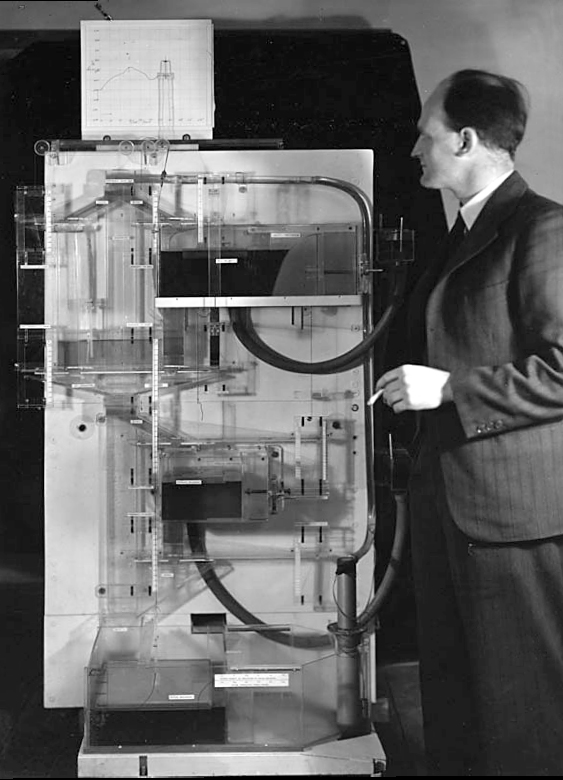
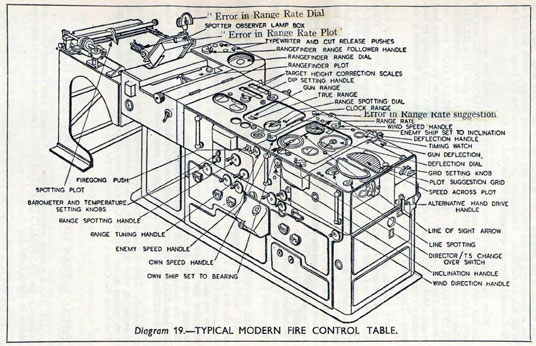
The MONIAC

Human Analogue Machine

HAM

HAM

The Strategic Challenge

  • We know everything we’re doing now is inadequate
  • We don’t know exactly how it’s inadequate
  • Traditional “plan-then-execute” approaches won’t work
  • Need adaptive, learning-oriented strategies

Part 3: Maintaining Human Judgment and Building Trust (60 minutes)

When Algorithms Override Human Judgment: The Horizon Scandal

The Horizon Scandal

Techno-Inattention Bias in Organisations

Complexity in Action

  • Organizations develop “techno-inattention bias” - focusing on AI details while missing human dynamics
  • The “gorilla” of culture, relationships, and ethics goes unnoticed
  • Institutional inattentional blindness develops when leadership fixates on technical aspects

The Danger of Superficial Automation

Superficial Automation

  • AI enables automation of surface-level tasks
  • Examples: Email writing, document summarization
  • Risk of losing deeper value in the process

Hidden Value

  • Email writing builds relationships
  • Documentation creates institutional memory
  • Human pauses enable reflection

The Automation Challenge

Good Process Drives Purpose

Maintaining Human Judgment: Key Principles

  • Algorithms should inform, not dictate, critical decisions
  • Human judgment must remain accessible and exercisable
  • Build in mechanisms for questioning algorithmic outputs
  • Maintain transparency about when humans vs machines decide
  • Develop “intelligent accountability” for AI-assisted decisions

Exercise 2: Case Study Analysis - The Horizon Scandal (30 minutes)

Debrief: Lessons for AI Governance

  • Never treat algorithmic outputs as infallible
  • Maintain accessible human override mechanisms
  • Build systems for questioning AI conclusions
  • Ensure diverse voices can raise concerns
  • Create intelligent accountability frameworks

Part 4: Strategic Implementation and the Attention Economy (60 minutes)

Human Attention as Strategic Resource

The Attention Economy

Herbert Simon on Information

What information consumes is rather obvious: it consumes the attention of its recipients. Hence a wealth of information creates a poverty of attention …

Simon (1971)

The Uncertainty Principle of Human Capital Quantification

Inflation of Human Capital

  • Strength in Human Capital double-edged sword.
  • Automation creates efficiency.
  • But skills risk becoming redundant.

The Business Imperative: People First, Not AI First

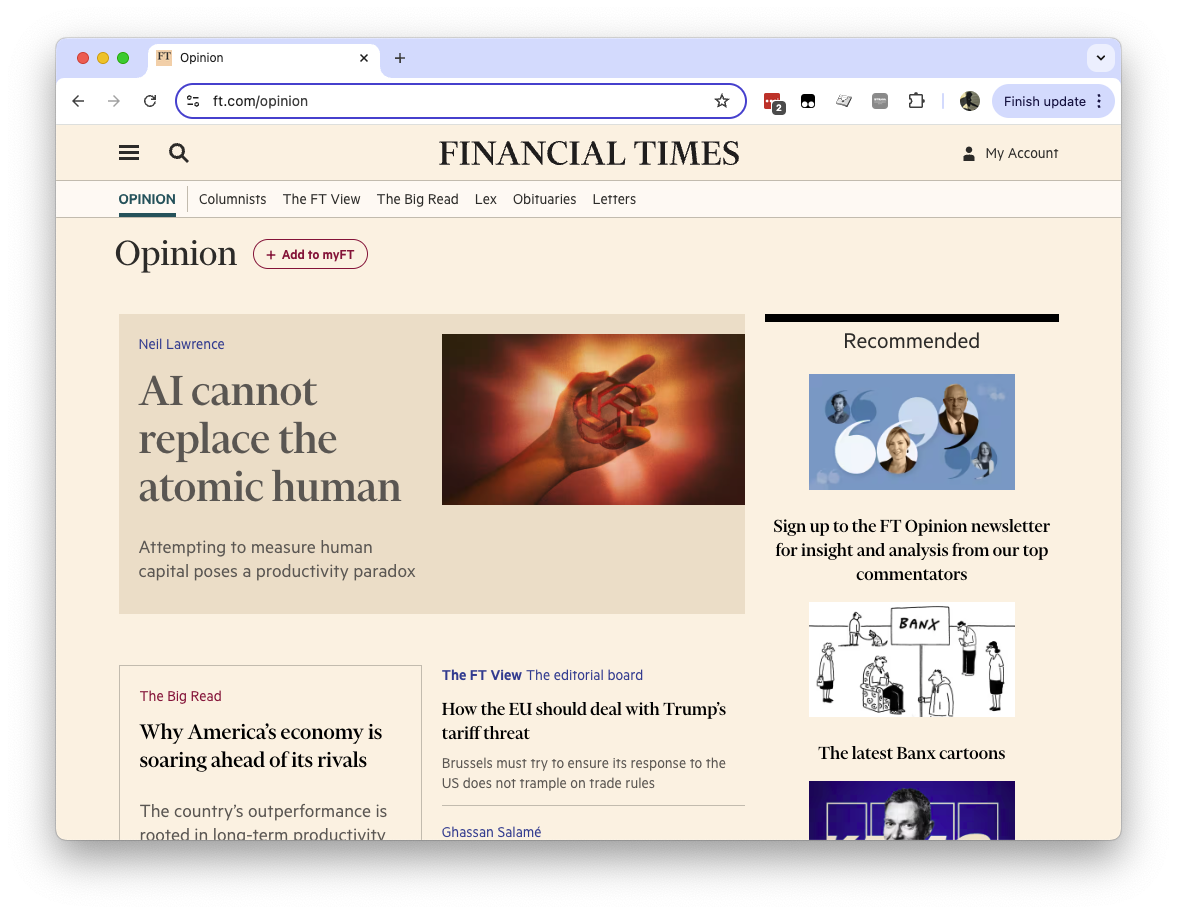
AI cannot replace atomic human

The Atomic Human Approach for Business

  • Human attention is the differentiator
  • Focus on how your human capital needs to adapt
  • People-first approach, not AI-first
  • Culture becomes the competitive moat

The Attention Flywheel: Reinvesting Human Capital

Attention Reinvestment Cycle

Emulsion: Combining Human and Machine Intelligence

Developing Board-Level Digital Literacy

Board-Level AI Governance Questions

  • What decisions is AI making or influencing?
  • Where does human judgment remain essential?
  • How do we know when AI systems are failing?
  • Who is accountable for AI-assisted decisions?
  • How do we maintain organizational culture with AI?

Exercise 3: Developing Your Organisation’s AI Strategy (45 minutes)

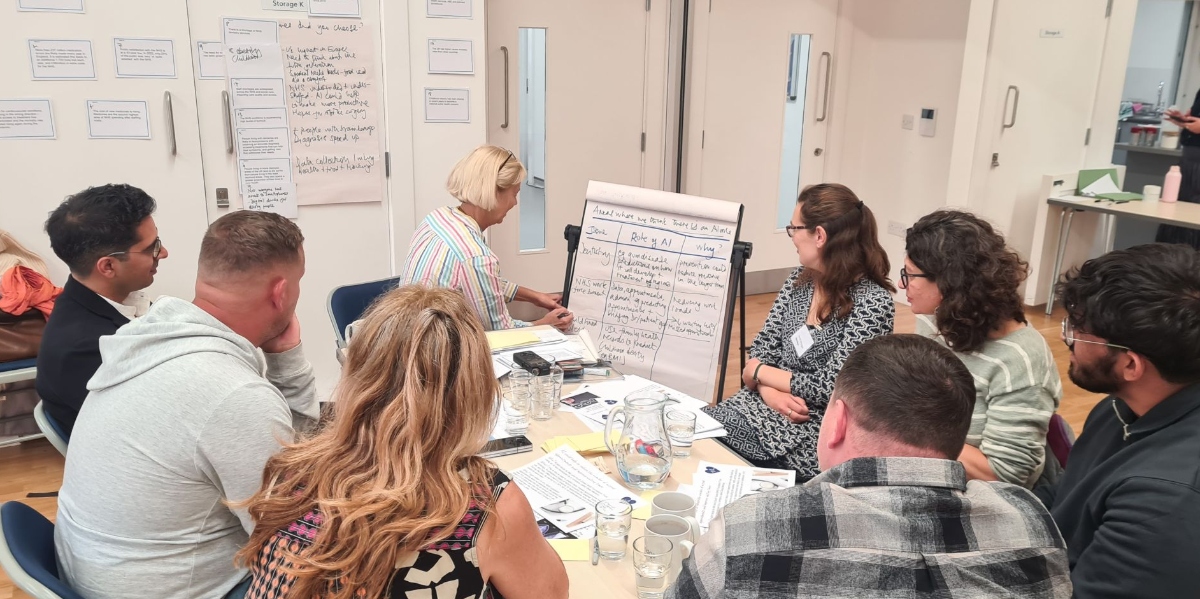
Group Presentations: Key Questions

  • What is your most counterintuitive insight?
  • Where will you NOT use AI (and why)?
  • What is your biggest implementation challenge?
  • How will you measure success beyond productivity metrics?

Conclusion: Architecting Human-Machine Collaboration

.

Key Takeaways: Strategic Framework

  • AI reshapes information flows - understand your information topography
  • Human attention is your scarcest and most valuable resource
  • Balance centralized oversight with devolved decision-making
  • Recognize LLMs as interfaces, not substitutes for judgment
  • Build intelligent accountability into all AI deployments

Leadership Imperatives

  • Lead with organizational culture, not technology
  • Invest in human capital development alongside AI
  • Maintain human judgment in critical decisions
  • Build governance for AI systems from day one
  • Focus on attention allocation, not just task automation

The People-First AI Strategy

  • Domain expertise must lead AI implementation
  • Develop institutional character around AI use
  • Create the attention flywheel for your organization
  • Build trust through transparency and accountability
  • Remember: In the long run, your differentiators are human

Further Reading and Resources

Thanks!

  • company: Trent AI

  • book: The Atomic Human

  • twitter: @lawrennd

  • The Atomic Human pages atomic human, the 13 , Le Scaphandre et le papillon (The Diving Bell and the Butterfly) 10–12, Bauby, Jean Dominique 9–11, 18, 90, 99-101, 133, 186, 212–218, 234, 240, 251–257, 318, 368–369, Shannon, Claude 10, 30, 61, 74, 98, 126, 134, 140, 143, 149, 260, 264, 269, 277, 315, 358, 363, telepathy 248-50, anthropomorphization (‘anthrox’) 30-31, 90-91, 93-4, 100, 132, 148, 153, 163, 216-17, 239, 276, 326, 342, topography, information 34-9, 43-8, 57, 62, 104, 115-16, 127, 140, 192, 196, 199, 291, 334, 354-5, anthropomorphization (‘anthrox’) 30-31, 90-91, 93-4, 100, 132, 148, 153, 163, 216-17, 239, 276, 326, 342, trust 43, 79, 100, embodiment factor 13, 29, 35, 79, 87, 105, 197, 216-217, 249, 269, 327, 353, 363, 369, topography, information 34-9, 43-8, 57, 62, 104, 115-16, 127, 140, 192, 196, 199, 291, 334, 354-5, MONIAC 232-233, 266, 343, ignorance: HAMs 347, test pilot 163-8, 189, 190, 192-3, 196, 197, 200, 211, 245, human-analogue machine (HAMs) 343-347, 359-359, 365-368, Horizon scandal 371.

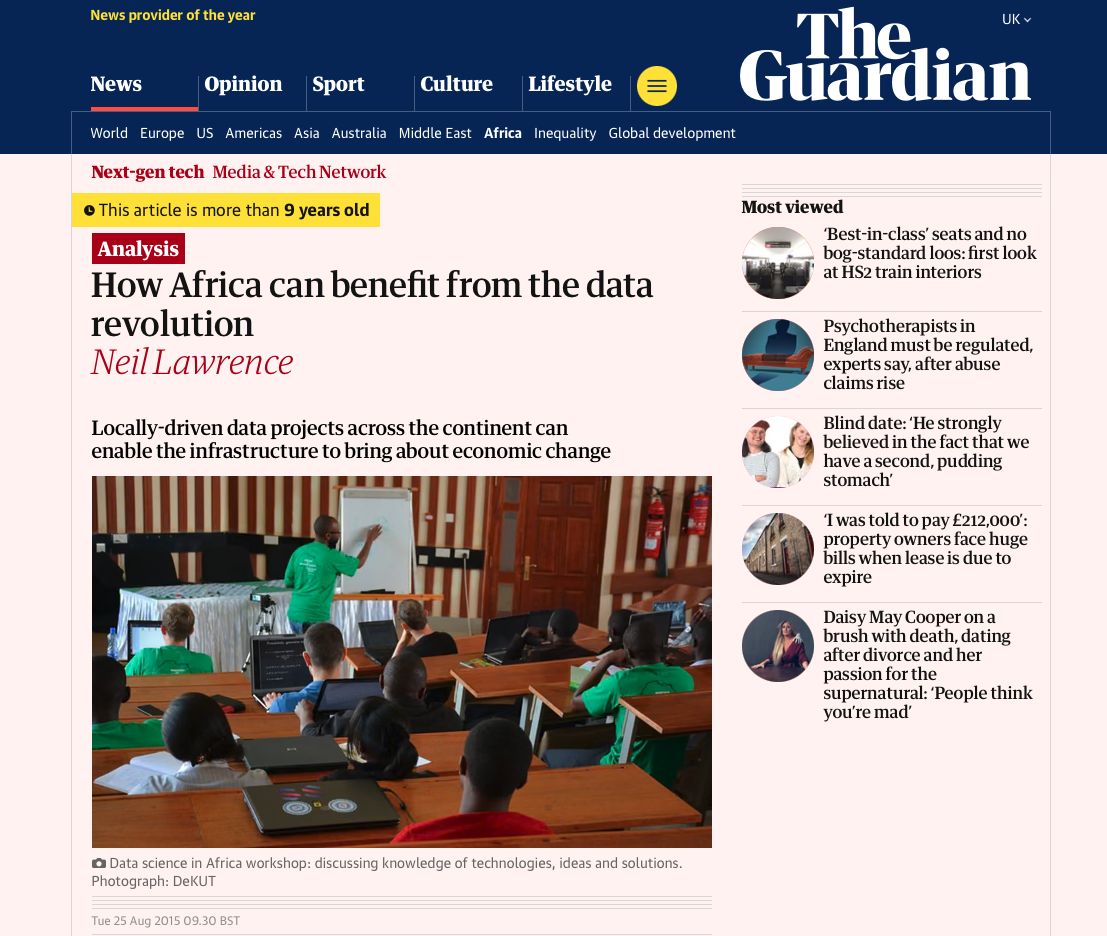
  • newspaper: Guardian Profile Page

  • blog posts:

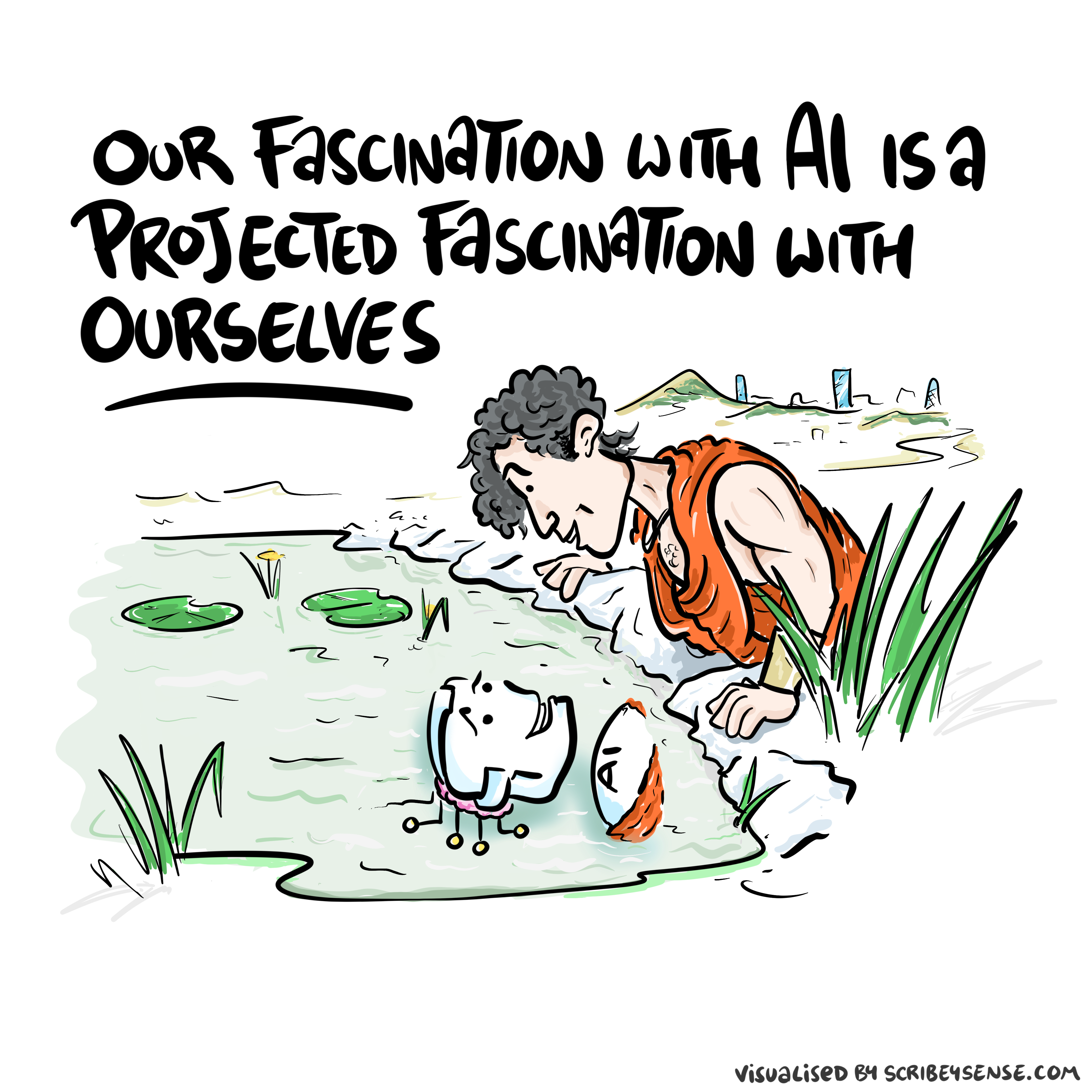
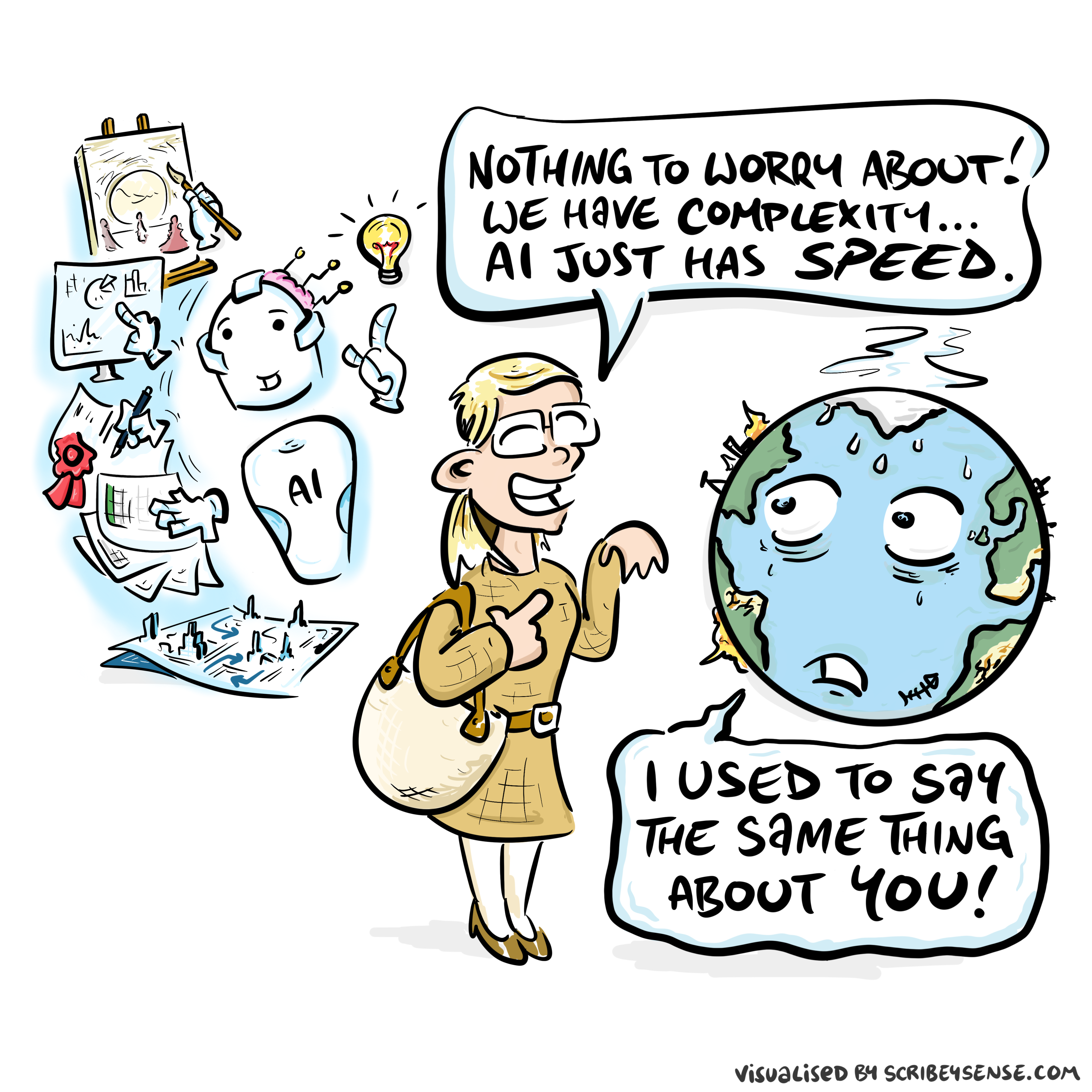
    Dan Andrews image of our reflective obsession with AI

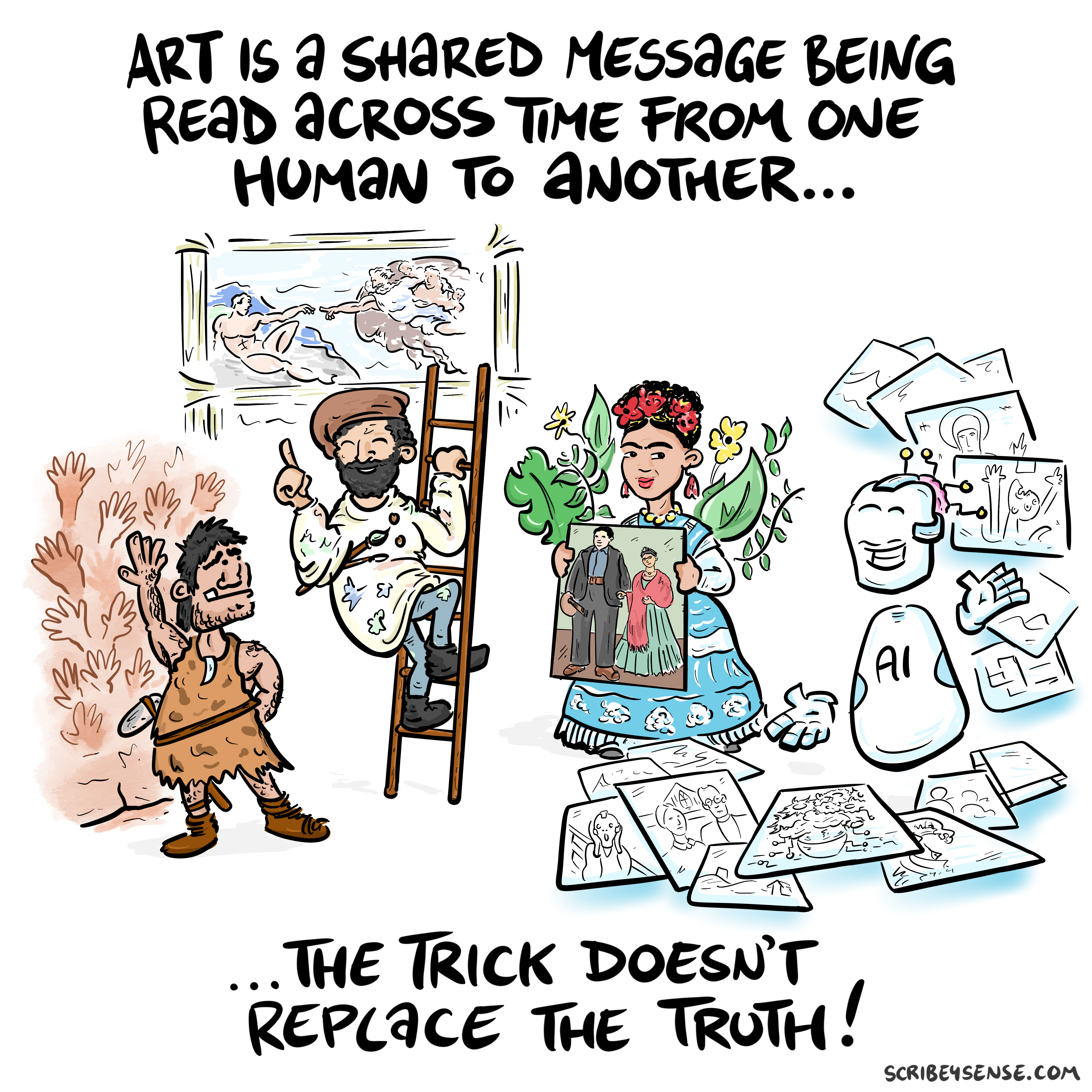
    Dan Andrews image from Chapter 3

    Dan Andrews image from Chapter 3

    Playing in People’s Backyards

References

Conway, M.E., n.d. How do committees invent? Datamation 14, 28–31.
Lawrence, N.D., 2024. The atomic human: Understanding ourselves in the age of AI. Allen Lane.
Simon, H.A., 1971. Designing organizations for an information-rich world. Johns Hopkins University Press, Baltimore, MD.