The Inaccessible Game
Information and the Limits of Intelligence
Department of AI, Data and Decision Sciences, Luiss Guido Carli University, Rome
Artificial General Vehicle
Artificial General Vehicle
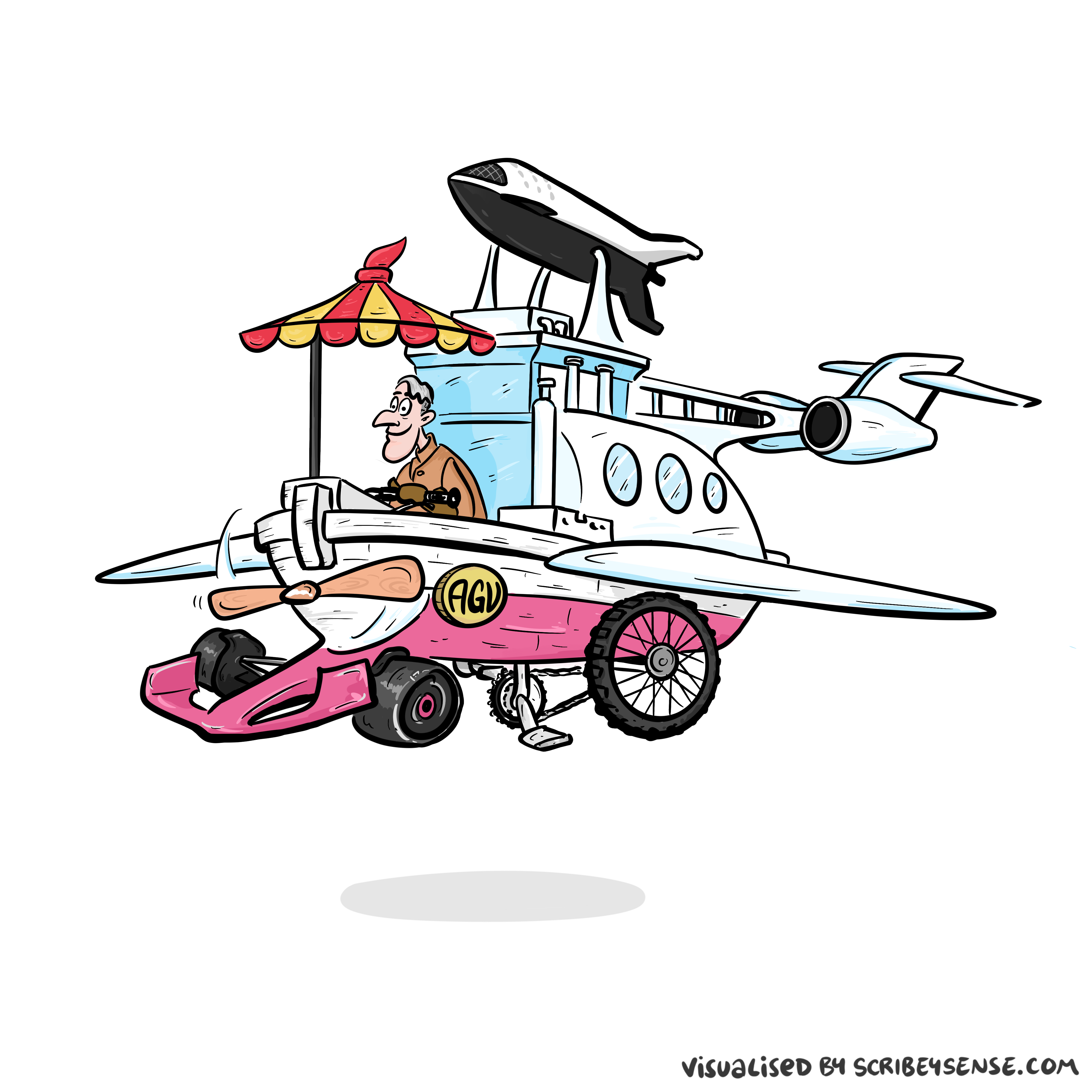
The Atomic Human
Communication Bandwidth
- Human communication: walking pace (2000 bits/minute)
- Machine communication: light speed (billions of bits/second)
- Our sharing walks, machine sharing …
Formalising Information Topography
From Metaphor to Mathematics:
Atomic Human: “Information topography” = intuitive concept
Inaccessible Game: seeks a formal definition
The Munchkin Provision
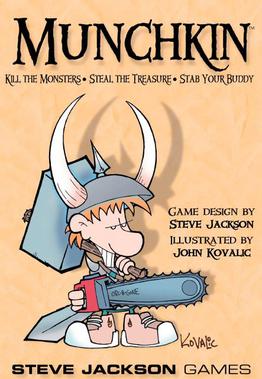
Munchkin Card Game
Rules may be inconsistent … so …
Any other disputes should be settled by loud arguments, with the owner of the game having the last word.
Munckin Rules (Jackson, 2001)
A Tautology
Self-governing systems cannot refer to external arbitration.
The No-Barber Principle
Russell’s Barber Paradox:
- Barber shaves all who don’t shave themselves
Does the barber shave themselves?
- Paradox: Definition includes itself in scope
No External Adjudicators
Forbidden:
- External observer
- Pre-specified outcome space/Hamiltonian
- Privileged decomposition
- External time parameter
No appeal to structure outside the game
Baez-Fritz-Leinster Characterization of Information Loss
Baez et al. (2011):
- Entropy from category theory
- Three axioms uniquely determine information loss
- No probability needed initially
The Three Axioms
\[F(f \circ g) = F(f) + F(g)\]
- Information loss is additive
- Compose processes → add losses
Convex Linearity
\[F(\lambda f \oplus (1-\lambda)g) = \lambda F(f) + (1-\lambda)F(g)\]
- Probabilistic mixture of processes
- Linear in probability weights
Continuity
- Small change in process
- Small change in information loss
- \(F(f)\) continuous in \(f\)
The Main Result
Three axioms \(\Rightarrow\) unique form: \[F(f) = c(H(p) - H(q))\]
- Information loss = scaled entropy difference
- Shannon entropy emerges from axioms
- No other measure satisfies all three
The Inaccessible Game Setup
- Avoid external structure.
- Represent information loss
- Enforce information conservation
Information Isolation
- Define information loss
- Isolate game from observation/interaction
- No external observer can extract or inject information
Marginal Entropy Conservation
\[ \sum_{i=1}^N h_i = C \]
- Isolation: cf energy conservation — but for information
Thermalisation from Different Initial Conditions
- 9 balls on a \(3 \times 3\) grid;
- Different starting conditions.
Initialisation: Display:
Sampling Two Dimensional Variables
Correlation
- Correlation is when two variables are dependent
Sampling Two Dimensional Variables
Jaynes and Maximum Entropy

Maximum Entropy Motivation
- Jaynes (1957): Statistical mechanics as inference with incomplete information
- Maximum entropy principle: maximise uncertainty given constraints
- Avoids unwarranted assumptions beyond available data
Dice Example
- Dice example: Average result 4.5 instead of 3.5
- Constraints:
- \(\sum_{n=1}^6 P_n = 1\) (normalization)
- \(\sum_{n=1}^6 nP_n = 4.5\) (observed average)
Die Roll Simulation
Rolls: 0
Sample mean: —
H(p): —
Outcome weights (auto-normalised to probabilities)
The General Maximum-Entropy Formalism
\[ p_i = \frac{\exp(-\lambda_1 f_1(x_i) - \ldots - \lambda_m f_m(x_i))}{Z(\lambda_1,\ldots,\lambda_m)} \] \[ Z(\ldots) = \sum_{i=1}^n \exp(-\lambda_1 f_1(x_i) - \ldots - \lambda_m f_m(x_i)) \] \[ \langle f_k \rangle = -\frac{\partial}{\partial \lambda_k}\log Z(\lambda_1,\ldots,\lambda_m) \quad k=1,2,\ldots,m. \]
The Classical Observer
The Classical Observer - Correlated
The Classical Observer - Anti-correlated
Back to self adjudication
The Classical Observer - Inaccessible
Joint Entropy
- We don’t see see the outcome space
- But we know it has a joint entropy
The \(I + H = C\) Structure
\[ \sum_{i=1}^N h_i = C \]
What does this conservation imply for dynamics?
Multi-Information: Measuring Correlation
\[ I = \sum_{i=1}^N h_i - H \]
‘Information Action’
\[ I + H = C \]
Conserved quantity splits into two parts
Analogy to classical mechanics
- Energy: \(V + T = E\)
- Information: \(I + H = C\)
- System “rolls downhill” from correlation to disorder
Entropy Configuration Mapping
The Entropy Ladder
The Exponential Family
\[ p(\mathbf{ y}|\boldsymbol{ \theta}) = \exp\!\left(\boldsymbol{ \theta}^\top T(\mathbf{ y}) - \psi(\boldsymbol{ \theta})\right) \]
- \(\boldsymbol{ \theta}\): natural parameters
- \(\psi(\cdot)\): cumulant generating function
- \(G(\boldsymbol{ \theta}) = \nabla^2\psi(\boldsymbol{ \theta})\): Fisher information
Axiomatically Distinguished
A choice is axiomatically distinguished if it is uniquely identifiable within the game’s axioms — without external structure such as Hamiltonians, clocks, or coordinates.
Maximum Entropy Production
- Maximum entropy production: unique in Fisher metric
- Constraint: marginal entropy conservation
Maximum Entropy Production
Maximise \[ \frac{\text{d}H}{\text{d}\tau} \] subject to \(\sum_i h_i = C\)
Long Story Short
- Can derive GENERIC-like dynamics.
- Origin suggests von Neumann entropy more natural than Shannon.
Connections
- Nice connections between.
- Thermodynamics and Inference (Jaynes).
- Information Geometry and GENERIC.
- Inaccessibility and noncommutative probability.
Energy
Pendulum Animation
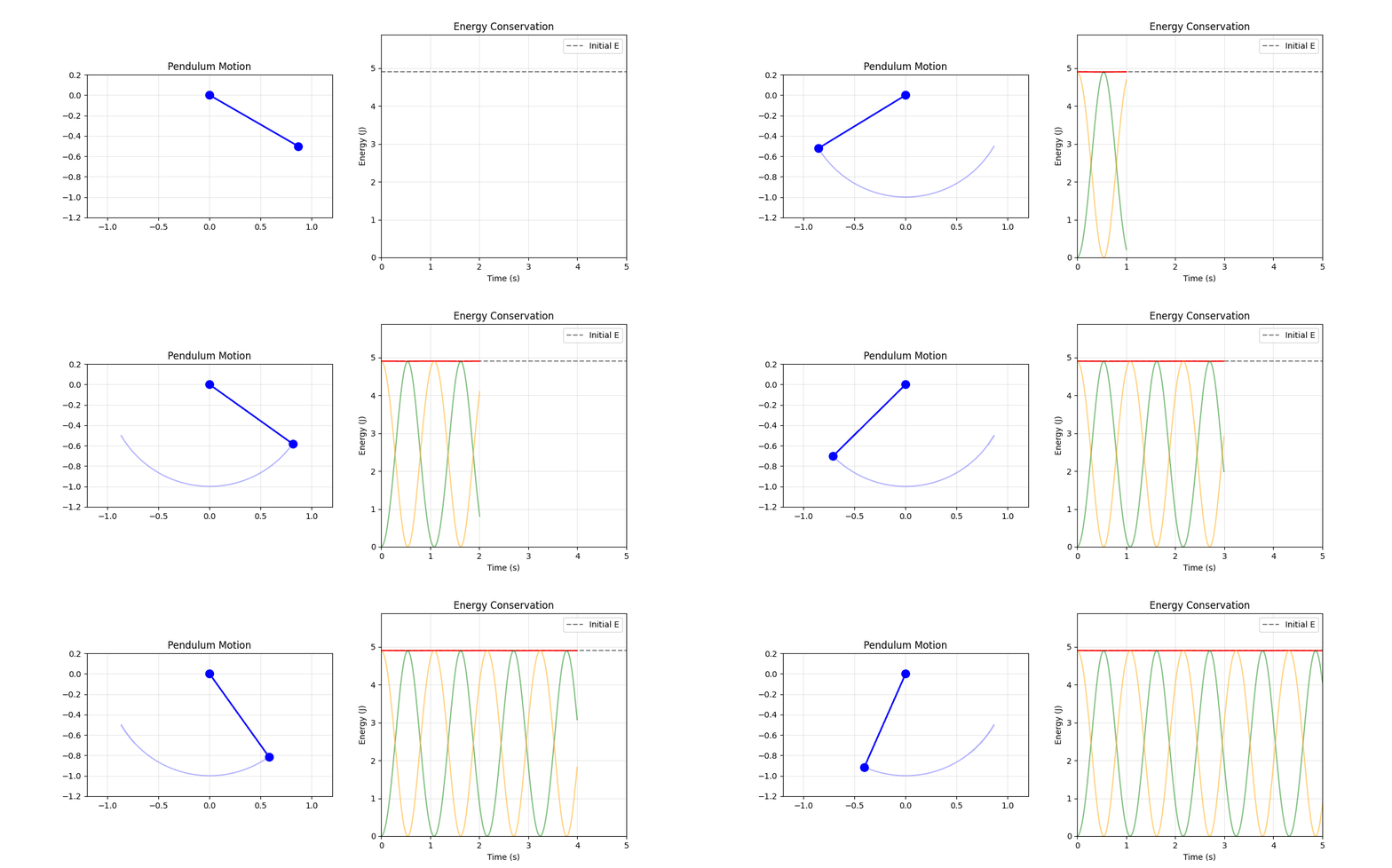
Energy
- In certain thermodynamic limits:
- Marginal entropy conservation \(\equiv\) Energy conservation
See Lawrence (2025)
Intelligence
Perpetual Motion and Superintelligence
- 1925: Promises of perpetual motion cars
- 2025: Promises of superintelligence singularity
- Same fundamental impossibility?
Why Perpetual Motion Failed
\[\frac{\text{d}H}{\text{d}t} \geq 0\]
- Entropy always increases
- No motion without entropy production
- No work without energy input
An Equivalent Statement for Intelligence?
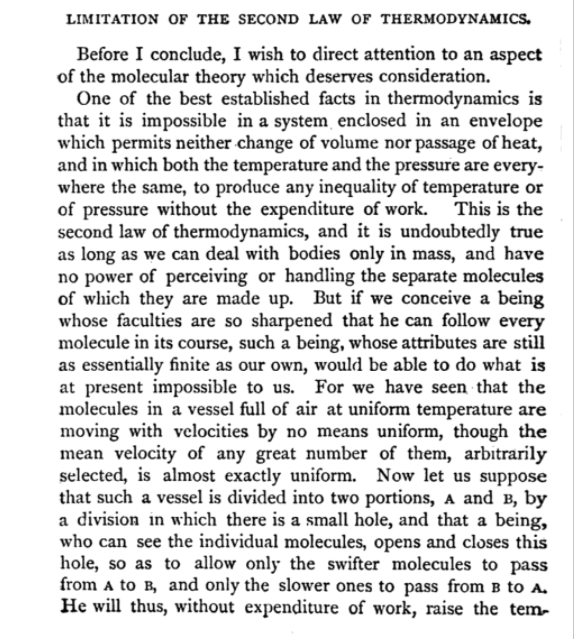
Maxwell’s Demon:
- “Intelligent” entity that violates 2nd law
- Resolution: Landauer’s principle?
- Information erasure requires energy
Implication
- Intelligence has thermodynamic cost
- Information processing has physical limits
Information-Theoretic Limits
Maxwell’s Demon
Information Infrastructures
- Information limits apply to institutions, not just individuals
- Embodiment factor shapes organisational information topography
- Machine-mediated data changes what organisations can know
- Beer’s Viable System Model: requisite variety for institutions (Beer, 1972)
New Flow of Information
New Flow of Information
Evolved Relationship
Evolved Relationship
How Information Flows in Organisations
Hub-and-Spoke
Peer-to-Peer
Conclusions
- No-barber principle
- Information isolation
- Axiomatic selection
Conclusions
- Emergent effective rules
- Limits on intelligence
- Social Oranisation
Thanks!
- company: Trent AI
- book: The Atomic Human
- twitter: @lawrennd
- The Atomic Human pages atomic human, the 13 , topography, information 34-9, 43-8, 57, 62, 104, 115-16, 127, 140, 192, 196, 199, 291, 334, 354-5, anthropomorphization (‘anthrox’) 30-31, 90-91, 93-4, 100, 132, 148, 153, 163, 216-17, 239, 276, 326, 342.
- newspaper: Guardian Profile Page
- blog: http://inverseprobability.com