Information and Intelligence
The Stokes Society, Pembroke College
Motivation
Perpetual Motion and Superintelligence
- 1925: Motor vehicles (no perpetual motion)
- 2025: Promises of superintelligence singularity
- Same fundamental impossibility?
Why Perpetual Motion Failed
\[\frac{\text{d}H}{\text{d}t} \geq 0\]
- Entropy always increases
- No motion without entropy production
- No work without energy input
An Equivalent Statement for Intelligence?
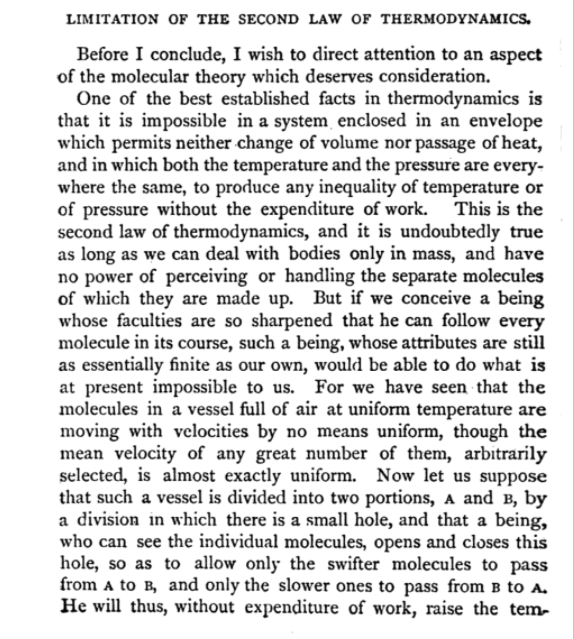
Maxwell’s Demon:
- “Intelligent” entity that violates 2nd law
- Resolution: Landauer’s principle?
- Information erasure requires energy
Implication
- Intelligence has thermodynamic cost
- Information processing has physical limits
Information-Theoretic Limits on Intelligence
Thermodynamics limits mechanical engines
Information theory limits information engines
Same kind of fundamental constraint
What Intelligent Systems Must Do
- Acquire information (sensing)
- Store information (memory)
- Process information (computation)
- Erase information (memory mgmt)
- Act on information (output)
What is the thermodynamic cost?
Landauer’s Principle
Erasing 1 bit requires: \(Q \geq k_B T \log 2\)
- Not engineering limitation
- Fundamental thermodynamic bound
- Entropy must go somewhere
At room temperature: \(\sim 3 \times 10^{-21}\) Joules/bit
Information
Thermalisation from Different Initial Conditions
- 9 balls on a \(3 \times 3\) grid;
- Different starting conditions.
Initialisation: Display:
Jaynes and Maximum Entropy

Maximum Entropy Motivation
- Jaynes (1957): Statistical mechanics as inference with incomplete information
- Maximum entropy principle: maximise uncertainty given constraints
- Avoids unwarranted assumptions beyond available data
Dice Example
- Dice example: Average result 4.5 instead of 3.5
- Constraints:
- \(\sum_{n=1}^6 P_n = 1\) (normalization)
- \(\sum_{n=1}^6 nP_n = 4.5\) (observed average)
Die Roll Simulation
Rolls: 0
Sample mean: —
H(p): —
Outcome weights (auto-normalised to probabilities)
The General Maximum-Entropy Formalism
\[ p_i = \frac{\exp(-\lambda_1 f_1(x_i) - \ldots - \lambda_m f_m(x_i))}{Z(\lambda_1,\ldots,\lambda_m)} \] \[ Z(\ldots) = \sum_{i=1}^n \exp(-\lambda_1 f_1(x_i) - \ldots - \lambda_m f_m(x_i)) \] \[ \langle f_k \rangle = -\frac{\partial}{\partial \lambda_k}\log Z(\lambda_1,\ldots,\lambda_m) \quad k=1,2,\ldots,m. \]
Sampling Two Dimensional Variables
Correlation
- Correlation is when two variables are dependent
Sampling Two Dimensional Variables
Independent Gaussians
Correlated Gaussians
Anticorrelated Gaussians
The Classical Observer
The Classical Observer - Correlated
The Classical Observer - Anti-correlated
The Inaccessible Game
The Munchkin Provision
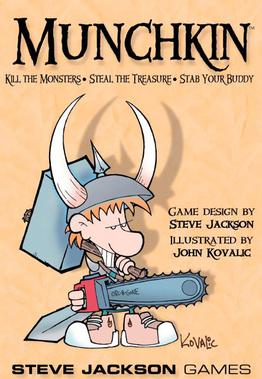
Munchkin Card Game
Rules may be inconsistent … so …
Any other disputes should be settled by loud arguments, with the owner of the game having the last word.
Munckin Rules (Jackson, 2001)
A Tautology
Self-governing systems cannot refer to external arbitration.
The No-Barber Principle
Russell’s Barber Paradox:
- Barber shaves all who don’t shave themselves
Does the barber shave themselves?
- Paradox: Definition includes itself in scope
No External Adjudicators
Forbidden:
- External observer
- Pre-specified outcome space/Hamiltonian
- Privileged decomposition
- External time parameter
No appeal to structure outside the game
Baez-Fritz-Leinster Characterization of Information Loss
Baez et al. (2011):
- Entropy from category theory
- Three axioms uniquely determine information loss
- No probability needed initially
The Three Axioms
\[F(f \circ g) = F(f) + F(g)\]
- Information loss is additive
- Compose processes → add losses
Convex Linearity
\[F(\lambda f \oplus (1-\lambda)g) = \lambda F(f) + (1-\lambda)F(g)\]
- Probabilistic mixture of processes
- Linear in probability weights
Continuity
- Small change in process
- Small change in information loss
- \(F(f)\) continuous in \(f\)
The Main Result
Three axioms \(\Rightarrow\) unique form: \[F(f) = c(H(p) - H(q))\]
- Information loss = scaled entropy difference
- Shannon entropy emerges from axioms
- No other measure satisfies all three
The Inaccessible Game Setup
- Avoid external structure.
- Represent information loss
- Enforce information conservation
Information Isolation
- Define information loss
- Isolate game from observation/interaction
- No external observer can extract or inject information
Marginal Entropy Conservation
\[ \sum_{i=1}^N h_i = C \]
- Isolation: cf energy conservation — but for information
The Classical Observer - Inaccessible
Joint Entropy
- We don’t see see the outcome space
- But we know it has a joint entropy
The \(I + H = C\) Structure
\[ \sum_{i=1}^N h_i = C \]
What does this conservation imply for dynamics?
Multi-Information: Measuring Correlation
\[ I = \sum_{i=1}^N h_i - H \]
‘Information Action’
\[ I + H = C \]
Conserved quantity splits into two parts
Analogy to classical mechanics
- Energy: \(V + T = E\)
- Information: \(I + H = C\)
- System “rolls downhill” from correlation to disorder
Lawvere Diagonalisation
Impossibility results sharing a structure:
- Russell’s paradox
- Cantor’s theorem
- Gödel incompleteness
- Turing’s halting problem
- Tarski’s undefinability
Unified by Lawvere diagonalisation (Lawvere, 1969)
The Five-Move Recipe
Lawvere’s Five-Move Recipe:
- Rules: operations from inputs to outputs
- Universal evaluator: run any rule on any input
- Internalise syntax: rules can reference all operations
- Self-application: rules can serve as their own input
- Twist: negate or complement outputs
When all five hold: contradiction is derivable
The Barber Paradox as Lawvere Diagonalisation
Barber as Lawvere:
| Step | Barber interpretation |
|---|---|
| Rules | shaving rules \(R\) |
| Evaluator | \(\text{shaves}((R,p),q)\) |
| Internalisation | each person \(p\) carries rule \(R_p\) |
| Self-application | \(R_p(p)\) |
| Twist | \(T(p) = \neg R_p(p)\) |
\(\Rightarrow\) contradiction: \(\text{shaves}(B,b) = \neg\text{shaves}(B,b)\)
Blocking Diagonalisation by Blocking Copying
Blocking the Construction:
Self-application requires cloning: \[\Delta : A \to A \times A, \quad \Delta(a) = (a,a)\]
- Cartesian category: canonical \(\Delta\) exists — Lawvere diagonalisation possible
- Symmetric monoidal category: no canonical \(\Delta\) — self-application step fails
Removing free copying blocks the diagonal construction
Linear Logic and No-Cloning
Two programmes that block copying:
Linear logic (Girard, 1987): * Assumptions are resources — can’t duplicate freely * Cartesian \(\to\) symmetric monoidal
Quantum probability (no-cloning): * No canonical \(A \to A \otimes A\) for unknown states * Noncommutative \(C^*\)-algebras replace Boolean event spaces
Both satisfy the no-barber constraint for independent reasons
Energy
Energy Constraints
- Normally we derive physical laws by
Maximise entropy subject to energy conservation
The Conservation Law
Marginal Entropy Conservation
\[ \sum_{i=1}^N h_i = C \]
Entropy Constraints
- Now derive game rules by
Maximise joint entropy subject to marginal entropy conservation
Energy
- In certain thermodynamic limits:
- Marginal entropy conservation \(\equiv\) Energy conservation
See Lawrence (2025)
Maxwell’s Demon
Conclusion
- Introduced inaccessible game
- Framework for studying information isolation
- A selection principle for a self-adjudicating system?
Thanks!
- company: Trent AI
- book: The Atomic Human
- twitter: @lawrennd
- The Atomic Human
- newspaper: Guardian Profile Page
- blog: http://inverseprobability.com