Artificial Intelligence and Commercial Applications
Recent Developments, Future Directions, and the Atomic Human
CEIBS Global CEO Programme, Møller Institute, Churchill College, Cambridge
Opening: Commercial Advantage in the Age of Intelligent Machines
Today’s Arc
- What AI is — and what it is not
- Commercial applications and organisational change
- Recent developments and future directions
Part 1: What AI Is (and Isn’t) for Commercial Leaders


Information and Embodiment

Embodiment Factors
| bits/min | billions | 2,000 |
|
billion calculations/s |
~100 | a billion |
| embodiment | 20 minutes | 5 billion years |
Communication Bandwidth
- Human communication: walking pace (2000 bits/minute)
- Machine communication: light speed (billions of bits/second)
- Our sharing walks, machine sharing …
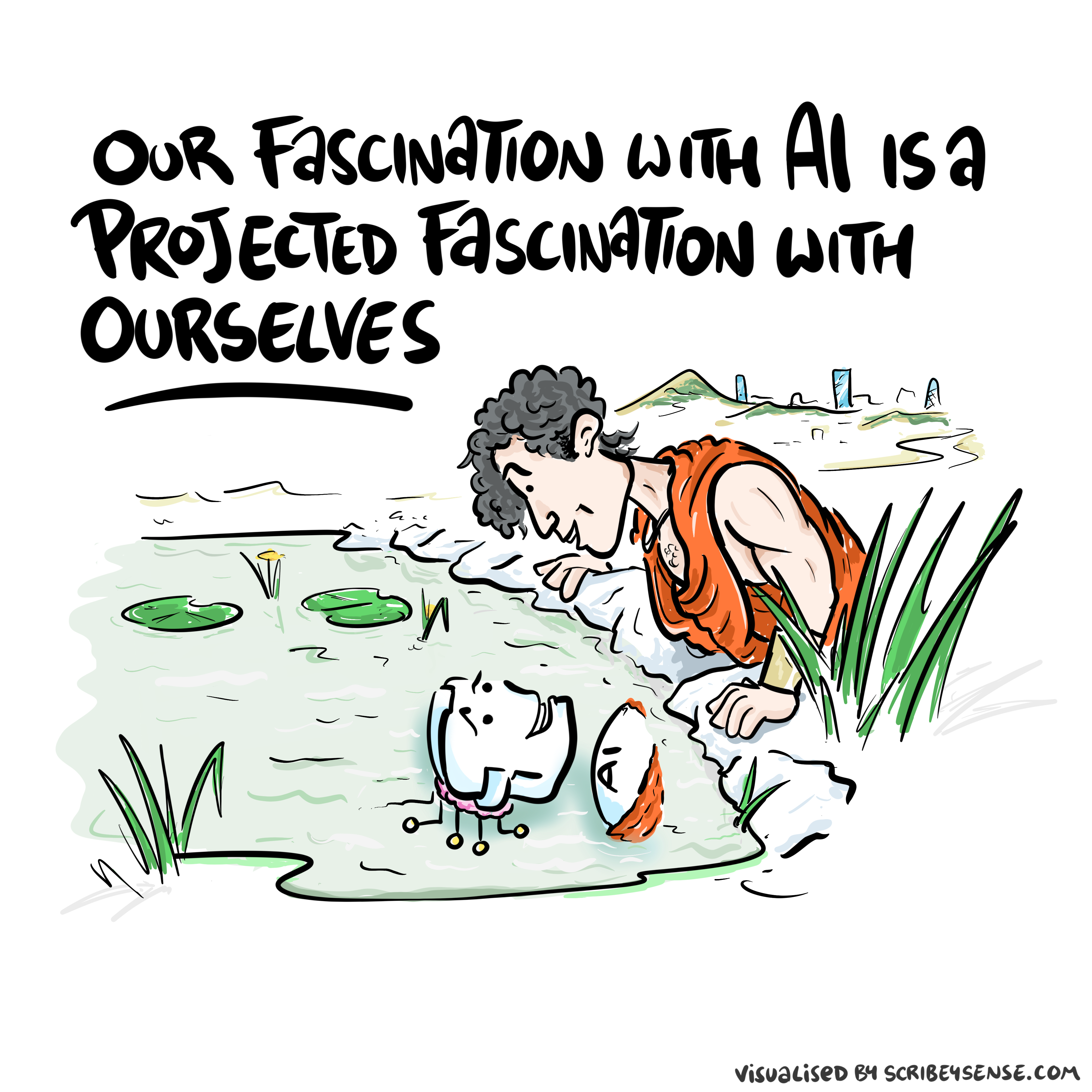

Homo Atomicus
- Where we have homo economicus the machine can step in.
- Quantitative vs Qualitative gap
- Homo atomicus is …
- Not in A-level results
- Not in hospital waiting lists
- In the quality of human interaction
Discussion 1
Discussion
- Where is the indivisible human contribution in your organisation?
- What would you not automate, even if you could?
Part 2: Commercial Applications and Organisational Change

The Attention Economy
- Human intelligence is locked-in
- This makes it a bottleneck
Herbert Simon on Information
What information consumes is rather obvious: it consumes the attention of its recipients. Hence a wealth of information creates a poverty of attention …
Simon (1971)
Institutional Character
Bezos memo to Amazon in 2002
The API Mandate
- All teams will henceforth expose their data and functionality through service interfaces.
- Teams must communicate with each other through these interfaces.
- There will be no other form of inter-process communication allowed: no direct linking, no direct reads of another team’s data store, no shared-memory model, no back-doors whatsoever. The only communication allowed is via service interface calls over the network.
- It doesn’t matter what technology they use.
- All service interfaces, without exception, must be designed from the ground up to be externalizable. That is to say, the team must plan and design to be able to expose the interface to developers in the outside world. No exceptions.
Duality of Corporation and Information
- What is less written about is corporate structure.
- This information infrastructure is reflected in the corporation.
- Two pizza teams with devolved autonomy.
- Bound together through corporate culture.
Conway’s Law
Any organization that designs a system (defined broadly) will produce a design whose structure is a copy of the organization’s communication structure.
Conway (n.d.)
Amazon and Agility
- Company prides itself on agility.
- Operates through a system of devolved autonomy
- Teams have defined inputs and outputs.
- Corporate culture bonds them togethether.
- Customer obsession
- Ownership
Cambridge
- Over 800 years old.
- Less commonly thought of as agile.
- Reliable institutional character.
- Amazon in comparison is more mecurial.
Organisational Data Science
- Claim:
- For data driven decision making to work there must be an interplay between institutional character and the information infrastructure.
Cultural Transplant
- Claim:
- Transplanting another organisation’s decision making infrastructure directly leads cultural rejection from the new host.
How Information Flows in Organisations
Hub-and-Spoke
Peer-to-Peer
More Information Topography
Information and Money Flow Together
Training and Culture as Hub
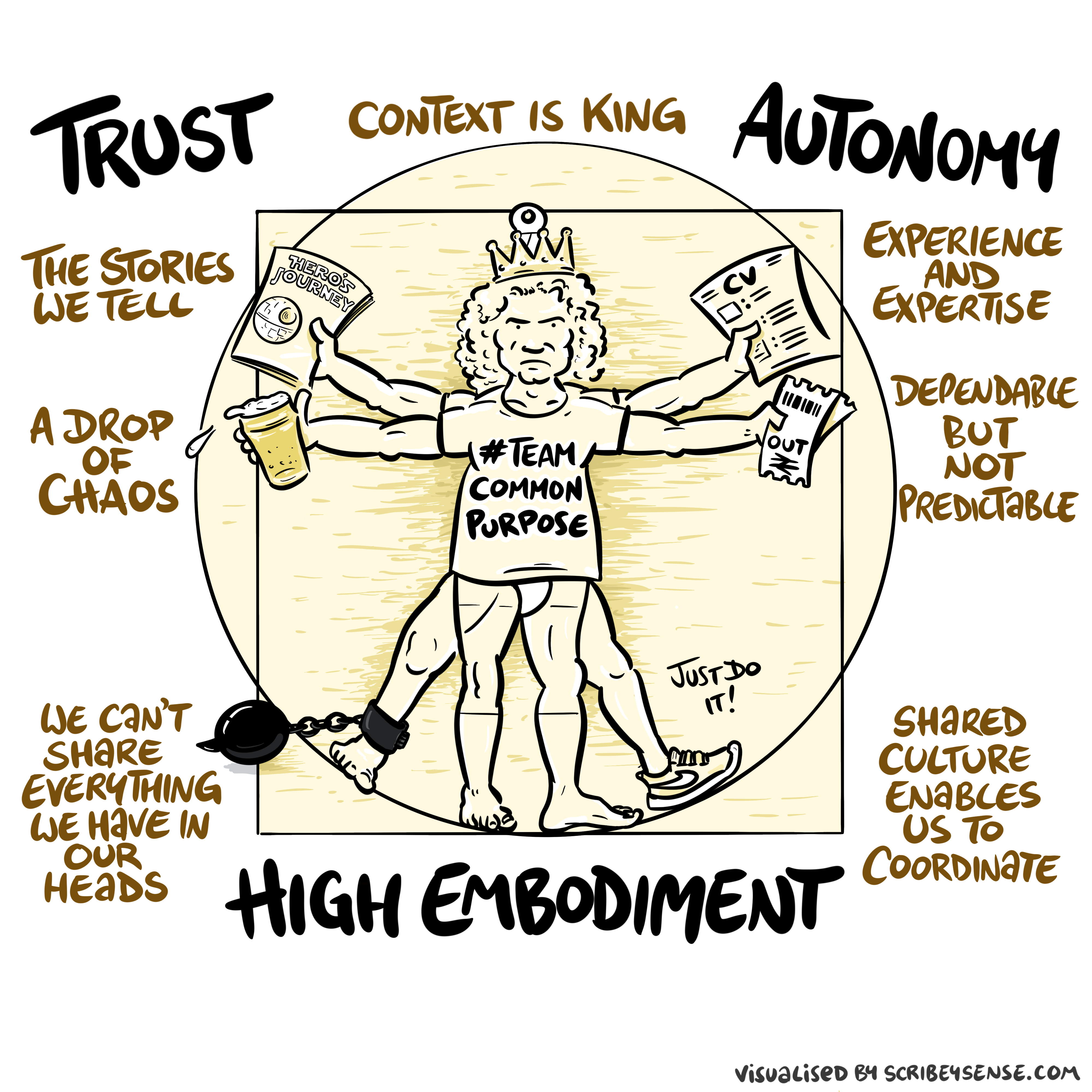
Trust, Autonomy and Embodiment
- Trust is not a slogan
- Trust is an infrastructure
- Autonomy depends on Trust
- Trust depends on shared culture
A Warning from Commercial Automation
The Horizon scandal

Where Superficial Automation Fails
Superficial Automation
- AI enables automation of surface-level tasks
- Examples: Email writing, document summarization
- Risk of losing deeper value in the process
Hidden Value
- Email writing builds relationships
- Documentation creates institutional memory
- Human pauses enable reflection
The Automation Challenge
- Complex ≠ Complicated
- Speed isn’t always progress
- Augment humans, don’t replace them
- See e.g. ai@cam public dialogues: https://ai.cam.ac.uk/projects/public-dialogues.html
Good Process Drives Purpose
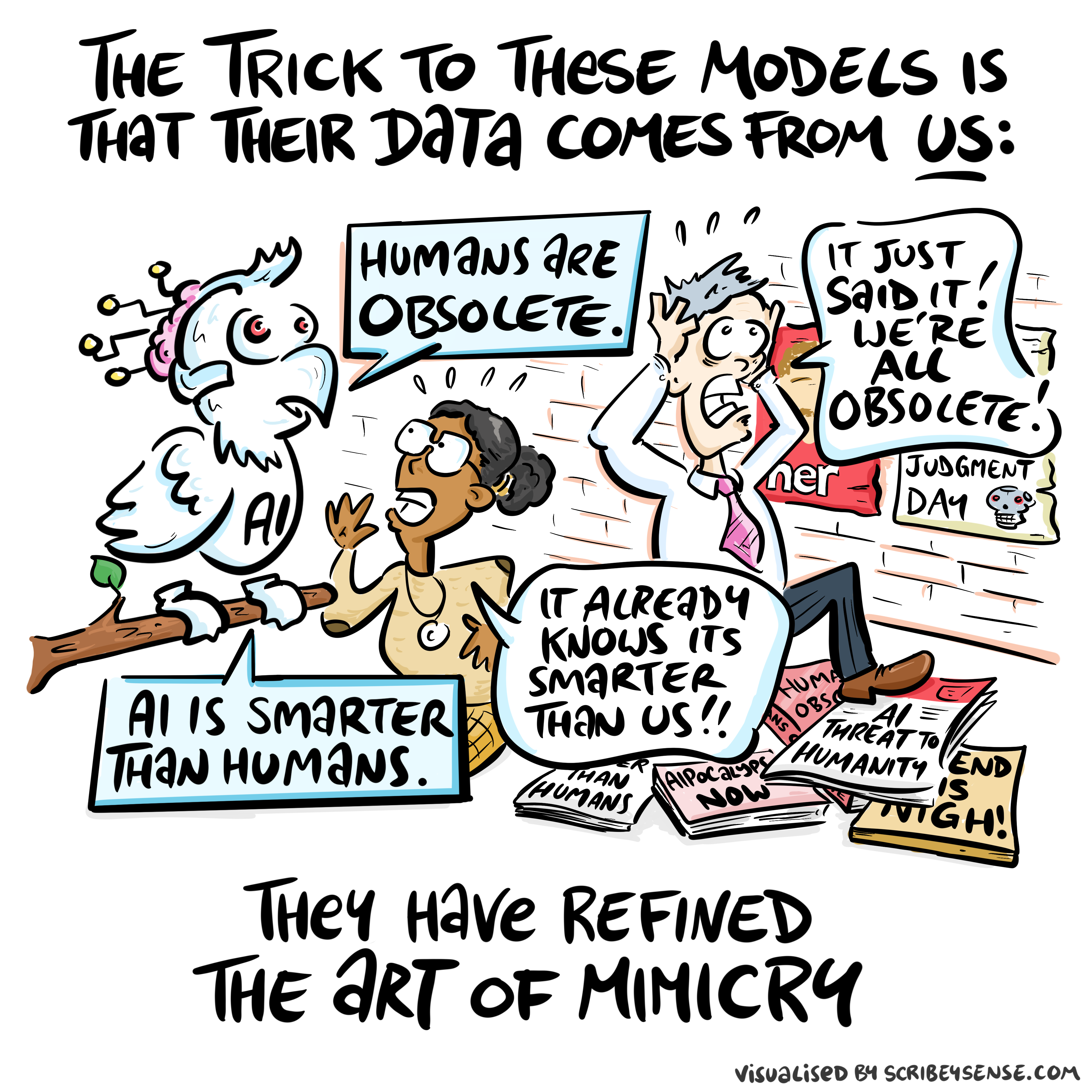
Two Types of Stochastic Parrot
Discussion 2
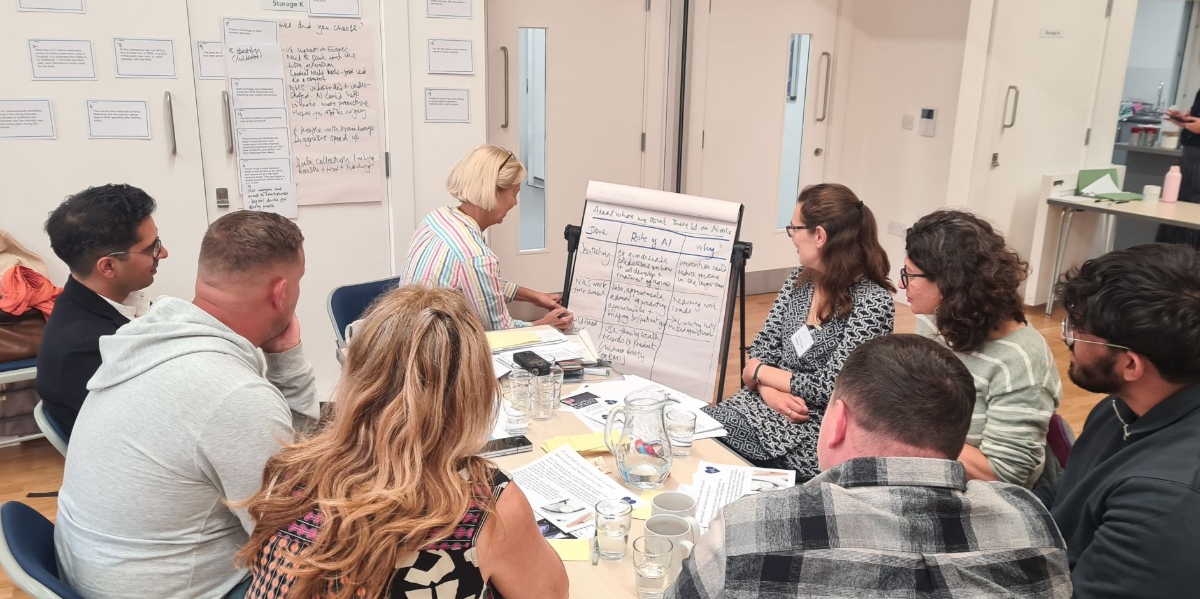
Discussion
- Map one critical information flow in your firm
- Where are the human bottlenecks?
- Where would AI help — and where would it create risk?
Part 3: Recent Developments and Future Directions
Recent Developments
- Generative AI as a human-analogue machine (HAM)
- Progress driven by harnesses and small models, not only scale
- Model minimisation keeps the judgement layer solvent
The MONIAC

Human Analogue Machine
HAM
HAM
Networked Interactions
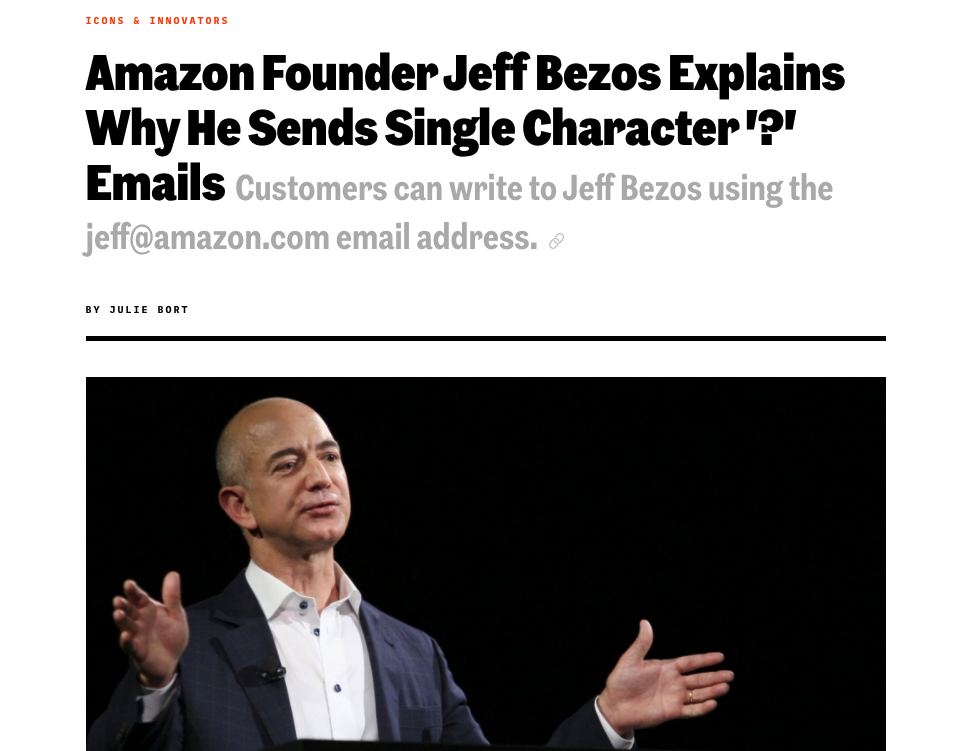
Question Mark Emails
Executive Sponsorship
- Direct sponsorship from the most senior executive.
- This has a cultural effect as well as a direct effect.
- Bring about through involvement
- develops understanding of capabilities of data science in exec team.
Pathfinder Projects
- In executive context: an important project that is interdepartmental.
- Should involve the CEO, CFO, CIO and data science team (or equivalents).
The Productivity Question
Productivity Flywheel
Attention Reinvestment Cycle
Supply Chain of Ideas
- Ideas flow from creation to application like physical supply chains
- Parallels with traditional economic supply chain management
- Particularly relevant for IT and AI solutions
Supply Chain of Ideas
- Current imbalance between supply and demand sides
- Mismatch between macroeconomic interventions and microeconomic need
- Over-Focus on solutionism
- technologies/companies
- Under-focus on real-world needs … disconnect between government and citizens … disconnect between companies and customers
Supply Chain of Ideas
- Need to map idea problems demand to idea supply
- Need to understand … problems (demand) … current “stock” of solutions (supply)
- Requires active management of idea resources
- Shape supply to meet demand
Future Directions: Opportunity and New Forms of Debt
The Good Regulator Theorem
The Good Regulator theorem
- Every good regulator of a system must be a model of that system.
- The judgement layer is the regulator: it must still model what it oversees.
- If the system outruns the model, regulation fails — even if the tools still run.
Why we minimise models
- We minimise so that we can maintain a model.
- Smallest decision-relevant representation that still supports oversight.
- Prefer decomposable systems over opaque monoliths.
Against maximisation by default
- “Use the largest model” is a default, not a design.
- Capability without a modellable envelope is how debt compounds.
- Ask: what is the least system that still earns regulated trust?
Harnesses and Small Models
Two ideas behind commercial progress
- The unreasonable effectiveness of orchestration
- The model minimisation principle
- Together: harnesses + small models on cognitive toil
The unreasonable effectiveness of orchestration
- Models emulate human behaviour
- Humans collaborate naturally, so the models to too
- A harness is a set of tools and instructions
- Can be specified by a worker with knowledge of job
Example: OSCAR
- OSCAR: Orchestrated Service & Citizen AI Router
- Peterborough City Council — led by Julian Patmore (Digital & Customer Access)
- A governed harness: routes requests to specialist services; staff keep the judgment
Local Government AI Accelerator
- ai@cam programme with local authorities
- Councils as partners from the outset
- Proof-of-concept AI for real operational needs
- Built on public dialogue about AI in local government
Small models on cognitive toil
- Cognitive toil: high-volume, low-novelty mental work that consumes attention.
- Prefer the least model that handles the routine class reliably.
Who introduces and monitors the harness
- Deploy with the people who already manage that role.
- They hold the live model of exceptions, escalation, and “good enough.”
- If they cannot introduce and monitor it, the Good Regulator condition fails.
AI arrives workflow by workflow
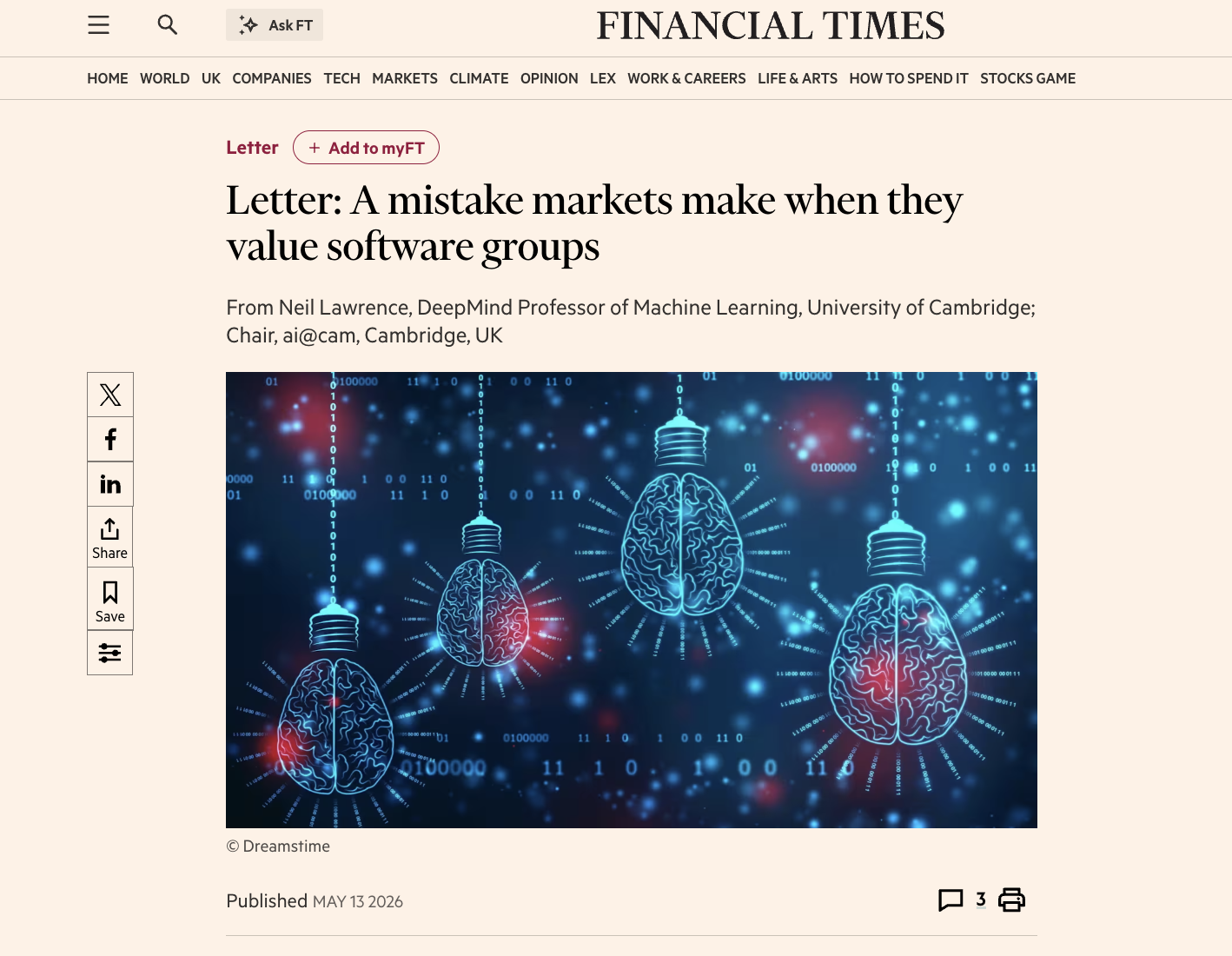
A mistake markets make
- Markets often treat AI as one centralised deployment
- Value arrives workflow by workflow, with people who know the work
- “Centralised deployment” is a supplier story; useful deployment is a demand story
Implication for software groups
- Do not value a portfolio as if AI were a single centre-led programme
- Underwrite the local judgment layer in each workflow
- Support demand-side adoption — do not only sell a supplier story
Do not lose the judgment
- Workflow-by-workflow only works if the judgment stays with the role.
- Automating toil without preserving exceptions makes judgment invisible, not absent.
- That invisibility is how agentic debt begins.
Agentic Debt
- Agentic AI could pay down technical and intellectual debt.
- But it can create agentic debt: delegation without authority/authorship
Agentic Debt
- Delegation of workflows without crisp boundaries.
- Agentic debt is about unsafe or illegible delegation.
.
.
Strategic Priorities for Leaders
- People first, not AI first
- Prefer harnesses and small models for cognitive toil
- Let role-holders introduce and monitor those harnesses
- Watch for agentic debt as systems begin to act
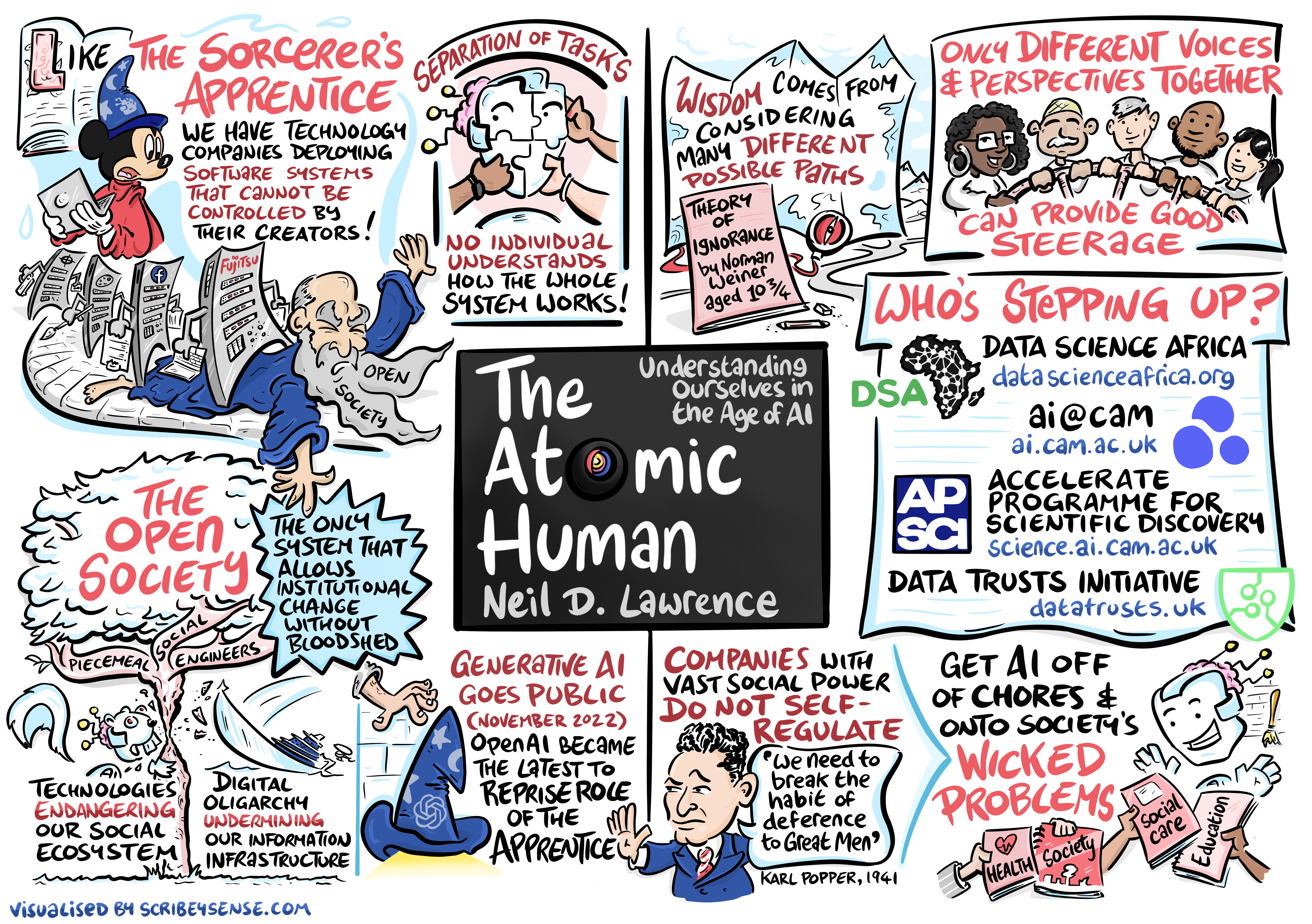
AI cannot replace atomic human

The Commercial Imperative
- Human attention is the differentiator
- Adapt human capital — do not only automate tasks
- Use AI on hard problems, not only on easy ones
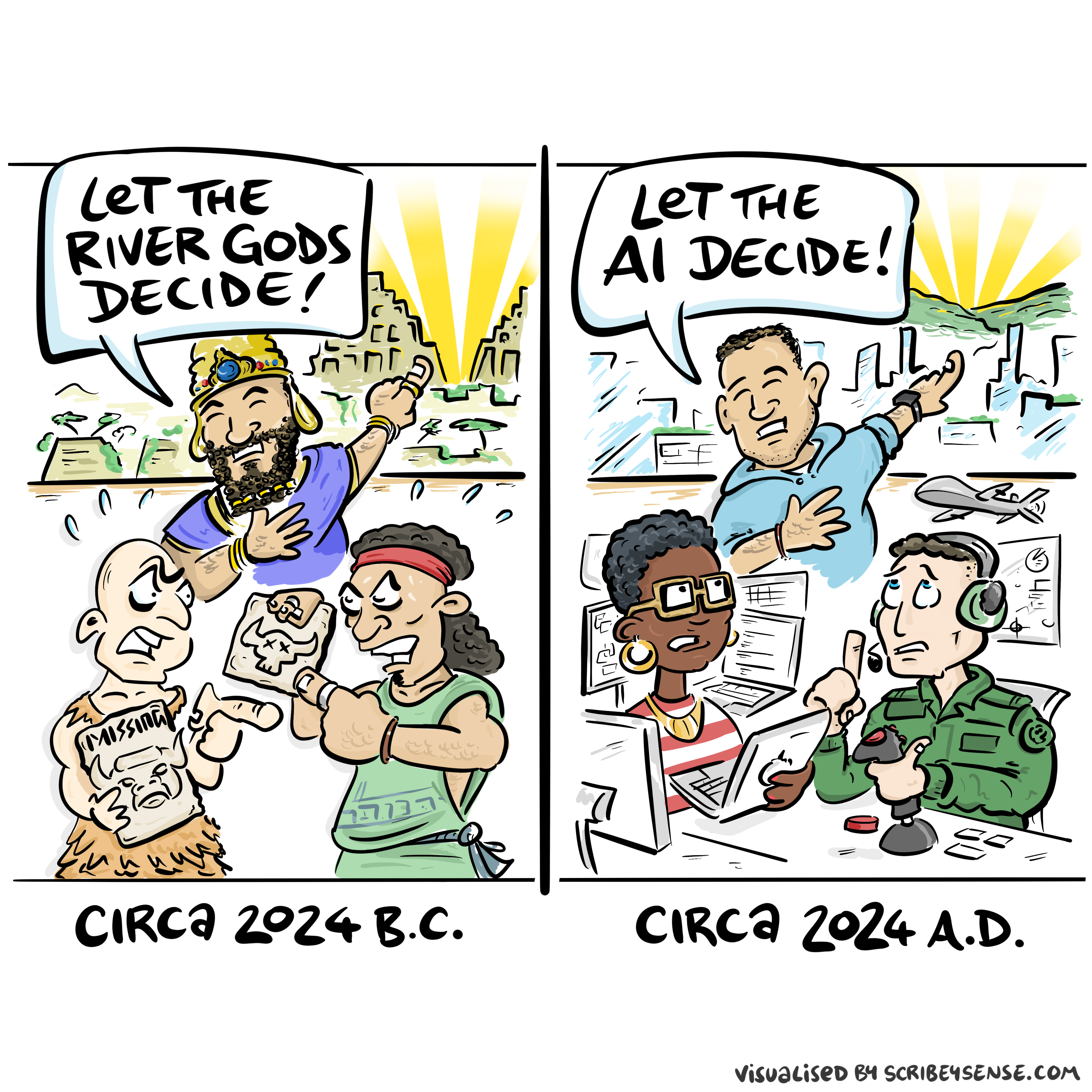
Wicked Problems
.
Close
Takeaways
- Commercial progress is harnesses + small models on cognitive toil
- Good Regulator: minimise so judgement can still model the system
- Advantage sits in the atomic human contribution
- Agentic debt accrues when regulation runs without a live model
Questions
- What will you stop automating?
- What will you redesign first?
- Where should human judgment remain non-negotiable?
Thanks!
company: Trent AI
book: The Atomic Human
twitter: @lawrennd
The Atomic Human pages atomic human, the 13 , baby shoes 368, topography, information 34-9, 43-8, 57, 62, 104, 115-16, 127, 140, 192, 196, 199, 291, 334, 354-5, anthropomorphization (‘anthrox’) 30-31, 90-91, 93-4, 100, 132, 148, 153, 163, 216-17, 239, 276, 326, 342, trust 43, 79, 100, embodiment factor 13, 29, 35, 79, 87, 105, 197, 216-217, 249, 269, 327, 353, 363, 369, topography, information 34-9, 43-8, 57, 62, 104, 115-16, 127, 140, 192, 196, 199, 291, 334, 354-5, Horizon scandal 371, MONIAC 232-233, 266, 343, ignorance: HAMs 347, test pilot 163-8, 189, 190, 192-3, 196, 197, 200, 211, 245, human-analogue machine (HAMs) 343-347, 359-359, 365-368.
blog posts:
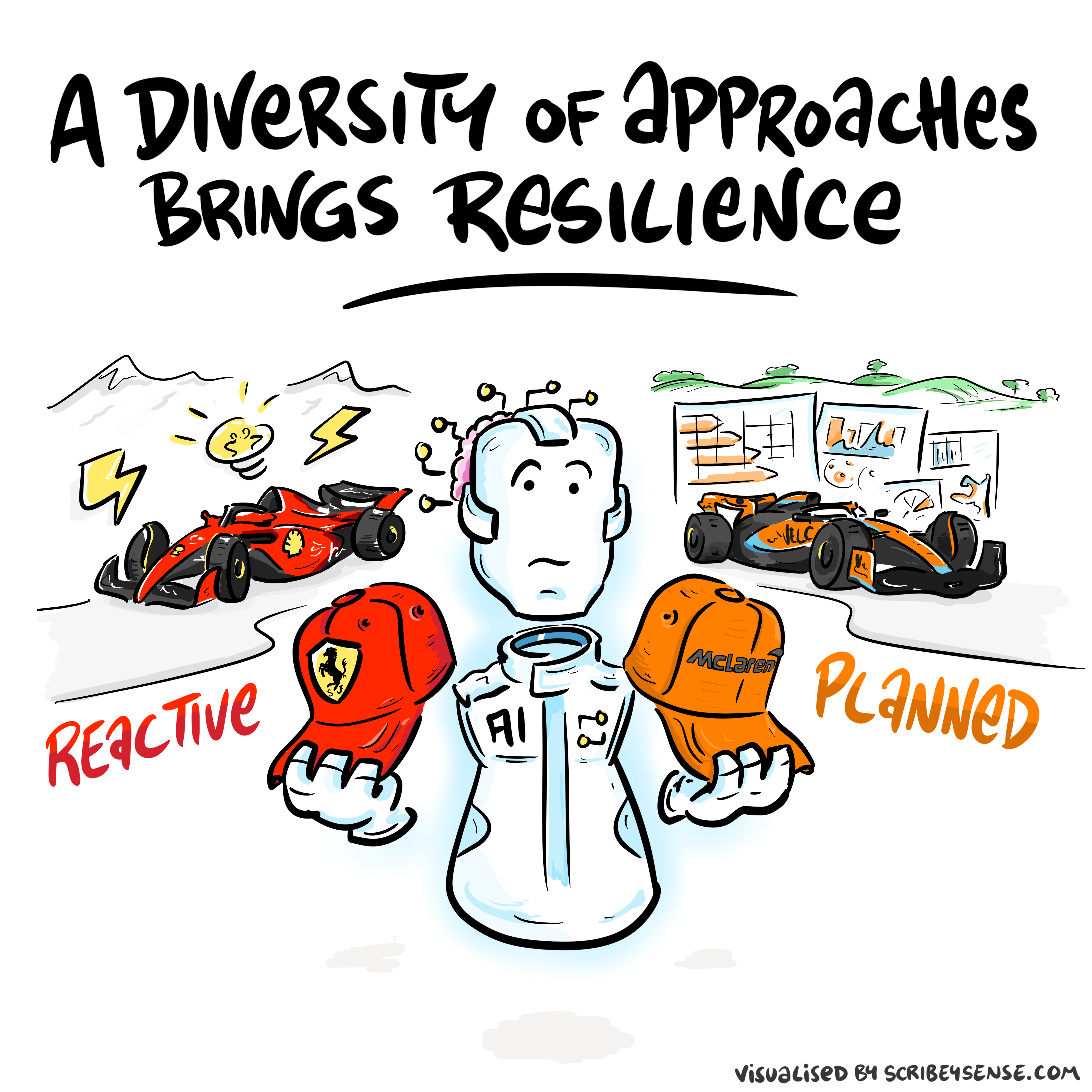
Dan Andrews image of our reflective obsession with AI
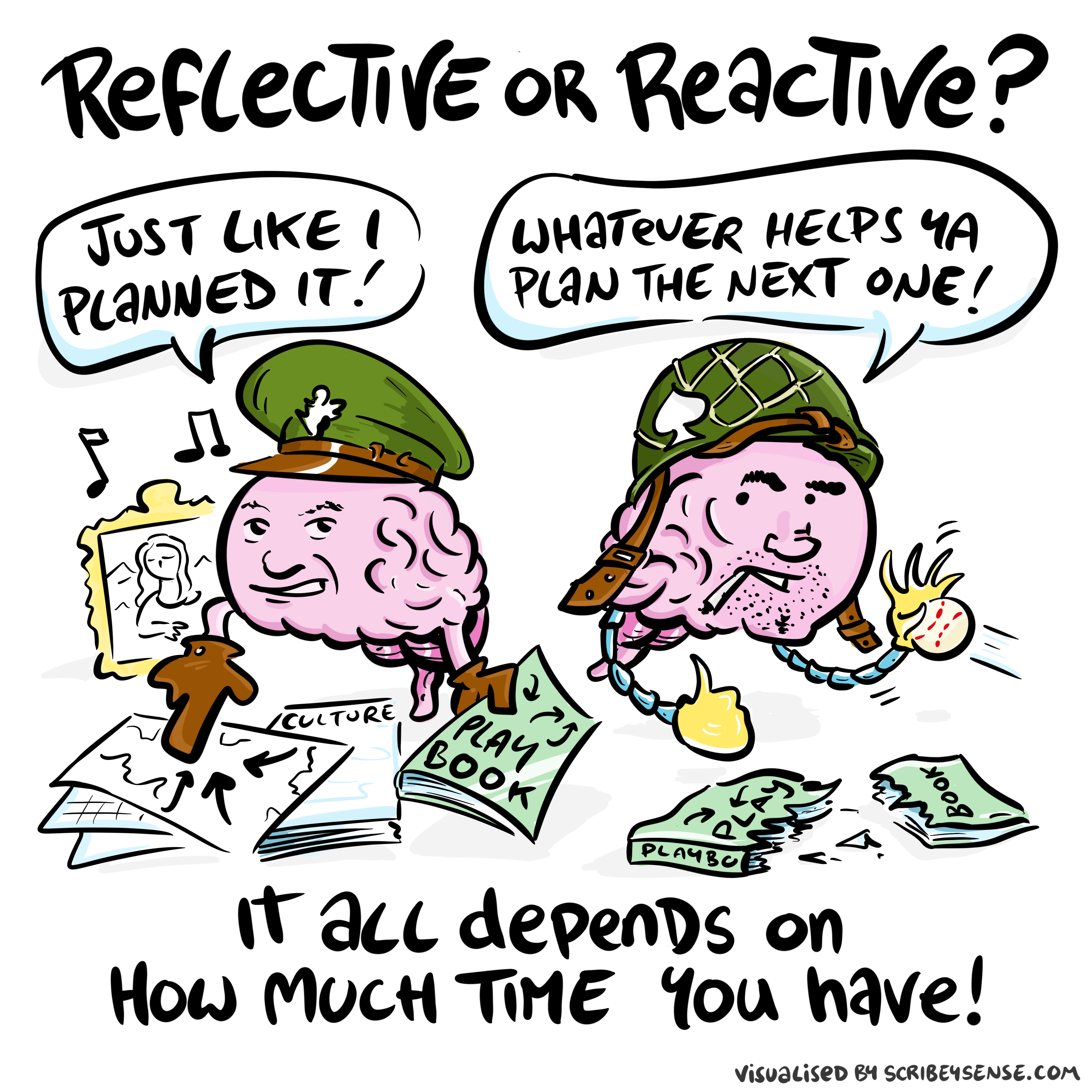
Dan Andrews image from Chapter 3
Dan Andrews image from Chapter 3